Tanka Tanka Archaeological Complex: The Impressive Pre-Inca Fortress of the Lupaka in Puno
8 de August de 2026
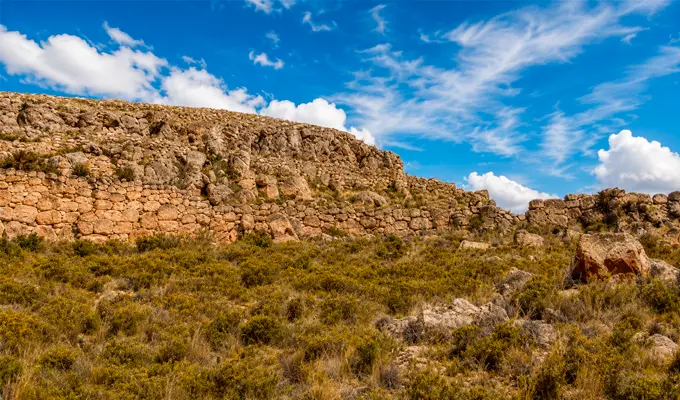
Located in the southernmost part of Puno, just a few kilometers from the border with Bolivia, the Tanka Tanka Archaeological Complex stands as one of the most fascinating and lesser-explored heritage sites in the highland region. This fortified settlement, built by the pre-Inca Lupaka lordship, impresses with its monumental dimensions and architecture, consisting of extensive defensive stone walls, chullpas or funerary towers, agricultural terraces, and ceremonial plazas that bear witness to the advanced social, military, and architectural development of this civilization.
Set within the vast expanse of the Andean landscape, Tanka Tanka is an authentic destination for enthusiasts of history, archaeology, and cultural tourism who seek to venture beyond conventional routes and connect with the ancestral heritage of the Andes.
Important Facts About the Tanka Tanka Archaeological Complex
Fact
Information
Location
Zepita, Puno
Elevation
3,973 m a.s.l.
Culture
Lupaka Lordship
Chronology
1200–1500 AD
Cultural Heritage
Since 2001
Main Attraction
Stone walls and chullpas
Where Is the Tanka Tanka Archaeological Complex Located?
The Tanka Tanka Archaeological Complex is strategically located in the district of Zepita, within the province of Chucuito, in the southern part of the Puno region. Situated approximately 15 kilometers from the town of Zepita and about 22.5 kilometers west of Desaguadero along the Binational Highway connecting with Moquegua, the site occupies a rocky elevation covering nearly 20 hectares. From this prominent position overlooking the vast highland plateau, the settlement not only benefited from natural defensive advantages but also enabled its inhabitants to exercise strict control over the surrounding territory and key communication routes.
Tanka Tanka Archaeological Complex
History of Tanka Tanka
Developed during the period of the Aymara lordships (between 1200 and 1500 AD), the complex flourished following the fall of Tiwanaku and prior to the expansion of the Inca Empire. During this period, the Lupaka society became one of the most prosperous and powerful groups in the Titicaca Basin, competing for regional dominance with other kingdoms such as the Collas, Pacajes, and Omasuyos.
Tanka Tanka was designed as a strategic center with defensive, administrative, and religious functions. Its construction on a high rocky promontory provided an almost impregnable position for monitoring the territory and protecting the population from enemy incursions. Today, the settlement stands out as one of the most remarkable and best-preserved examples of pre-Inca military architecture in southern Peru.
What Does Tanka Tanka Mean?
The origin of the name Tanka Tanka has several popular and linguistic interpretations. One of the most widespread associates its toponymy with the local fauna and geography of the area. According to this tradition, the rocky promontory on which the complex stands bears a striking resemblance to the body of a beetle locally known as tanka or jamatanka, an insect that held symbolic significance in the daily life and worldview of local communities.
Although different hypotheses exist regarding the exact etymology of the term, the name has remained unchanged over time, preserving the historical memory of this impressive archaeological site.
What to See at the Tanka Tanka Archaeological Complex?
Among the most remarkable architectural and historical elements of the Tanka Tanka Archaeological Complex, the following structures stand out:
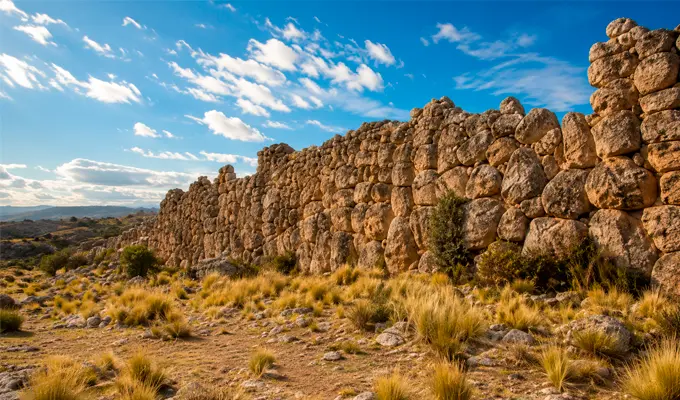
Defensive walls: These constitute the most impressive feature of the site, consisting of a system of eight stone walls (five main and three secondary walls) built along the hillside. They range from 4 to 6.5 meters in height and feature strategically misaligned entrances designed to hinder the passage of potential invaders.
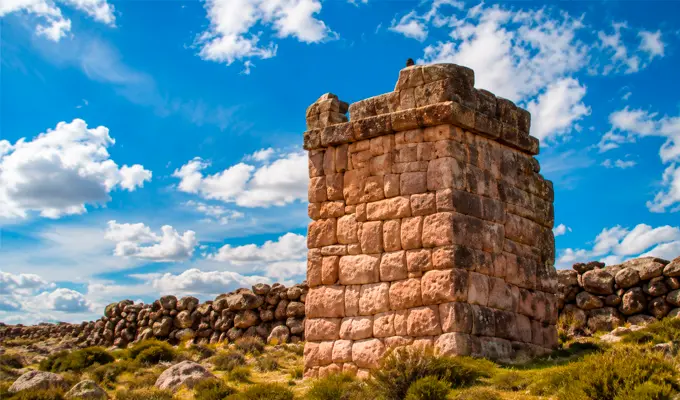
Funerary chullpas: Along the slopes, 26 funerary towers made of stone have been preserved in various shapes (square, circular, and conical), some reaching more than 7 meters in height. These structures were intended as burial places for the elites and prominent figures of Lupaka society.
Ceremonial courtyard: Located in the central area of the complex, this large open space hosted community gatherings, religious ceremonies, and rituals dedicated to Andean deities, all framed by the sacred importance of the hill.
Terraces and productive structures: Tanka Tanka incorporated agricultural and residential areas through terraced fields, remains of enclosures, ancient streets, and hydraulic systems, demonstrating its functional role as a center for production and territorial management.
La Chingana: At the highest point of the promontory lies this mysterious tunnel or passage, whose exact purpose remains under study, although evidence suggests that it served an important ritual or ceremonial function.
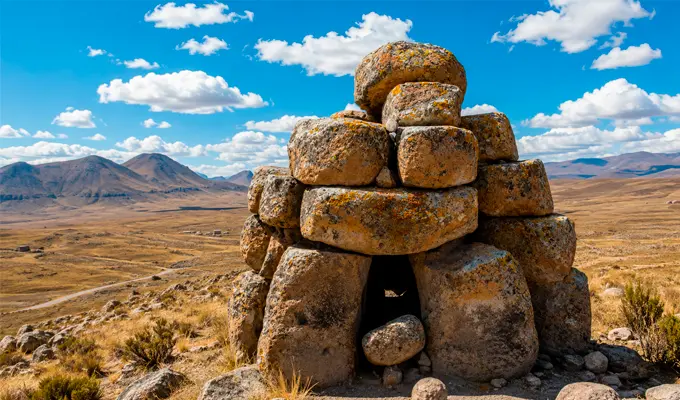
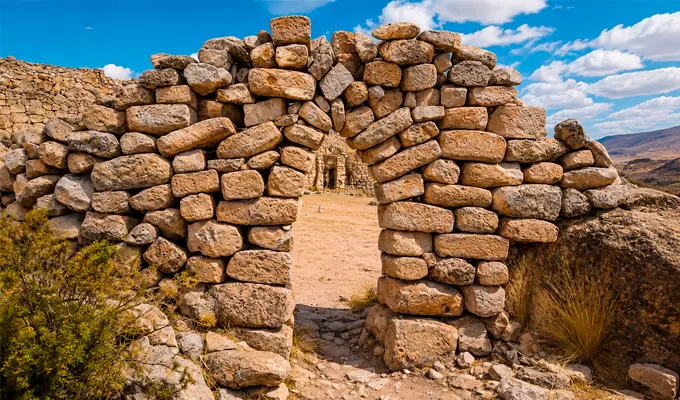
Stone hut at Tanka TankaStone arch at Tanka Tanka
Architecture of the Complex
The architecture of Tanka Tanka makes intelligent use of the site's natural geography.
The structures were built on top of an enormous natural rock formation that served as the foundation for the walls and provided a commanding view of the surrounding territory.
The complex combines:
Defensive walls.
Funerary towers.
Ceremonial spaces.
Residential structures.
Agricultural systems.
All of this demonstrates the advanced level of urban planning achieved by the Lupaka lordship.
Declaration as Cultural Heritage
In recognition of its historical, architectural, and social significance within the Andean highlands, the Tanka Tanka Archaeological Complex was officially declared Cultural Heritage of the Nation in 2001.
This state designation seeks to safeguard the integrity of one of the most important pre-Inca fortified complexes in southern Peru, ensuring the research, conservation, and preservation of its walls, chullpas, and archaeological remains for future generations.
How to Get to Tanka Tanka?
To visit the Tanka Tanka Archaeological Complex from the city of Puno, there are two main travel options:
On your own (from Puno): Take the paved road that runs along the southern shore of the lake toward Desaguadero, then turn toward the district of Zepita. From this town, the final stretch follows an unpaved road leading to the foothills of the archaeological complex. The total road journey takes approximately 3 hours, depending on the means of transportation used.
With an organized tour: This is a highly recommended option, usually including round-trip transportation, a specialized guide and additional stops at other historical attractions in the district of Zepita and the province of Chucuito, such as colonial churches and viewpoints, enriching the experience with a broader historical context.
Best Time to Visit
The Tanka Tanka Archaeological Complex can be visited throughout the year, adapting to the seasonal conditions of the highlands:
Best time to visit (May to October): This period coincides with the dry season in the region. During these months, the likelihood of rainfall decreases, making it easier to walk among the walls and chullpas, while also providing optimal visibility for enjoying the extensive Andean landscapes.
Recommendations for the visit: Since the site is exposed to the elements and located in a high-altitude area, it is advisable to take the walk in the morning to take advantage of more stable weather and bright sunshine before temperatures drop toward the end of the day.
Tanka Tanka Chullpa
Recommendations for Your Visit
To make the most of your visit to the Tanka Tanka Archaeological Complex and ensure a safe and respectful experience, it is advisable to follow these recommendations:
Located in the southernmost part of Puno, just a few kilometers from the border with Bolivia, the Tanka Tanka Archaeological Complex stands as one of the most fascinating and lesser-explored heritage sites in the Andean highlands. This fortified settlement, built by the pre-Inca Lupaka lordship, impresses with its monumental dimensions and architecture, consisting of extensive defensive stone walls, chullpas or funerary towers, agricultural terraces, and ceremonial plazas that bear witness to the advanced social, military, and construction skills of this civilization.
Set within the vastness of the Andean landscape, Tanka Tanka offers an authentic retreat for travelers passionate about history, archaeology, and cultural tourism who wish to move beyond conventional routes and connect with the ancestral heritage of the Andes.
Important Facts About the Tanka Tanka Archaeological Complex
Fact
Information
Location
Zepita, Puno
Altitude
3,973 m above sea level
Culture
Lupaka Lordship
Chronology
1200–1500 AD
Cultural Heritage
Since 2001
Main attraction
Defensive walls and chullpas
Where Is the Tanka Tanka Archaeological Complex Located?
The Tanka Tanka Archaeological Complex is strategically located in the district of Zepita, within the province of Chucuito, in the southern part of the Puno region. Situated approximately 15 kilometers from the town of Zepita and about 22.5 kilometers west of Desaguadero along the Binational Highway connecting to Moquegua, the site occupies a rocky elevation covering approximately 20 hectares. From this dominant promontory overlooking the vast Andean plateau, the settlement not only benefited from natural defensive advantages but also allowed its inhabitants to maintain close control over territorial movement and key communication routes in the surrounding area.
Tanka Tanka Archaeological Complex
History of Tanka Tanka
Developed during the period of the Aymara lordships, between 1200 and 1500 AD, the complex flourished following the decline of Tiwanaku and before the expansion of the Inca Empire. During this period, the Lupaka society became one of the most prosperous and powerful groups in the Lake Titicaca basin, competing for regional dominance with other kingdoms such as the Collas, Pacajes, and Omasuyos.
Tanka Tanka was designed as a strategic center with defensive, administrative, and religious functions. Its construction on a high rocky promontory provided an extremely defensible position for monitoring the territory and protecting the population from enemy incursions. Today, the settlement stands as one of the most remarkable and best-preserved examples of pre-Inca military architecture in southern Peru.
What Does Tanka Tanka Mean?
The origin of the name Tanka Tanka has several popular and linguistic interpretations. One of the most widespread connects its toponymy with the local fauna and geography of the area. According to this tradition, the rocky promontory on which the complex stands bears a striking resemblance to the body of a beetle locally known as tanka or jamatanka, an insect that held symbolic significance in the daily life and worldview of local communities.
Although different hypotheses exist regarding the exact etymology of the term, the name has remained unchanged over time, preserving the historical memory of this imposing archaeological site.
What to See at the Tanka Tanka Archaeological Complex?
Among the most remarkable architectural and historical features of the Tanka Tanka Archaeological Complex are the following structures:
Defensive walls: These are the most imposing feature of the site, consisting of a system of eight stone walls—five main walls and three secondary ones built along the slope of the hill. They range from 4 to 6.5 meters in height and feature strategically misaligned entrances designed to hinder the advance of potential invaders.
Funerary chullpas: The slopes preserve 26 funerary towers made of stone in various shapes, including square, circular, and conical forms. Some reach more than 7 meters in height. These structures were intended for the burial of elites and prominent figures within Lupaka society.
Ceremonial courtyard: Located in the central area of the complex, this large open space served as a venue for community gatherings, religious ceremonies, and rituals dedicated to Andean deities, reflecting the sacred importance of the hill.
Terraces and productive structures: Tanka Tanka incorporated agricultural and residential areas through agricultural terraces, remains of enclosures, ancient streets, and hydraulic systems, demonstrating its functional role as a center for production and territorial management.
La Chingana: At the highest point of the promontory lies this mysterious tunnel or passage, whose exact purpose remains under study, although evidence suggests that it may have had an important ritual or ceremonial function.
Stone hut at Tanka TankaStone arch at Tanka Tanka
Architecture of the Complex
The architecture of Tanka Tanka makes intelligent use of the site's natural geography.
The structures were built on top of a massive natural rock formation that served as a foundation for the walls and provided a commanding view of the surrounding territory.
The complex combines:
Defensive walls.
Funerary towers.
Ceremonial spaces.
Dwellings.
Agricultural systems.
All of this demonstrates the advanced level of urban planning achieved by the Lupaka lordship.
Declaration as Cultural Heritage
In recognition of its historical, architectural, and social significance within the Andean highlands, the Tanka Tanka Archaeological Complex was officially declared Cultural Heritage of the Nation in 2001.
This state designation seeks to safeguard the integrity of one of the most important pre-Inca fortified complexes in southern Peru, ensuring the research, conservation, and preservation of its walls, chullpas, and archaeological remains for future generations.
How to Get to Tanka Tanka?
To visit the Tanka Tanka Archaeological Complex from the city of Puno, there are two main travel options:
On your own from Puno: Take the paved road that runs along the southern shore of the lake toward Desaguadero, then turn toward the district of Zepita. From this town, the final stretch follows an unpaved road leading to the foothills of the archaeological complex. The total journey by road takes approximately 3 hours, depending on the means of transportation used.
By organized tour: This is a highly recommended option, usually including round-trip transportation, a specialized guide, and additional stops at other historical attractions in the district of Zepita and the province of Chucuito, such as colonial churches or viewpoints, enriching the experience with a broader historical context.
Best Time to Visit
The Tanka Tanka Archaeological Complex can be visited throughout the year, adapting to the seasonal conditions of the Andean highlands:
Best time to visit (May to October): This period coincides with the dry season in the region. During these months, the likelihood of rainfall decreases, making it easier to walk among the walls and chullpas, while also providing excellent visibility for enjoying the extensive Andean landscapes.
Recommended time for the visit: Since the site is fully exposed to the elements and located at a high altitude, it is advisable to take the walk in the morning, when weather conditions are generally more stable and sunlight is available before temperatures drop toward the end of the day.
Tanka Tanka Chullpa
Recommendations for Your Visit
To make the most of your visit to the Tanka Tanka Archaeological Complex and ensure a safe and respectful experience, it is advisable to follow these recommendations:
Warm clothing: Bring appropriate warm clothing and a windbreaker, as winds in the Andean highlands can be cold throughout most of the year.
Hiking footwear:Wear comfortable footwear with good traction, suitable for walking along dirt trails and uneven or rocky terrain.
Sun protection:Apply sunscreen, wear a hat or cap, and use sunglasses to protect yourself from UV radiation at high altitude.
Water and snacks: Bring enough drinking water and snacks or light refreshments, as there are no shops or services within the archaeological complex.
Heritage conservation: Respect the monumental surroundings by avoiding climbing, sitting on, or stepping onto the defensive walls and chullpas in order to help preserve the site.
Local guide: Consider exploring the site with a local guide to gain a deeper understanding of the historical, architectural, and cultural significance of this Lupaka fortress.
Nearby Places to Visit
After exploring the Tanka Tanka Archaeological Complex, a journey through southern Puno allows visitors to discover a series of historically, naturally, and religiously significant attractions in the Andean highlands:
Zepita: A town renowned for its valuable colonial architectural heritage, including impressive colonial churches such as San Pedro and San Sebastián, featuring stone-carved façades and interiors.
Desaguadero: A border city with Bolivia characterized by intense commercial and cultural exchange, located at the point where the Desaguadero River originates from Lake Titicaca.
Lake Titicaca: The highest navigable lake in the world accompanies much of the route through this area, offering spectacular panoramic views, local piers, and unique lakeside landscapes.
Chucuito: Known as the "City of the Royal Treasury", it stands out for its historic mansions, main square, and important past as a center for tax collection during the colonial period.
Temple of Fertility (Inca Uyo):Located in Chucuito, this unique archaeological complex is characterized by its phallic-shaped stone sculptures, associated with ancient Andean fertility rituals and worship of the earth.
Pomata: Known as the "Balcony of Lake Titicaca", this picturesque town is home to the Church of Our Lady of the Rosary, one of the most impressive examples of mestizo Baroque architecture in the Andean highlands.
Frequently Asked Questions
Which culture built Tanka Tanka? It was built by the Lupaka Aymara lordship, one of the most prosperous and influential kingdoms that inhabited the Andean highlands before the expansion of the Inca Empire.
What can you see at the complex? The site features an imposing system of defensive walls, 26 chullpas or funerary towers, agricultural terraces, ancient streets, a central ceremonial courtyard, and the mysterious chingana at the top of the promontory.
Why is Tanka Tanka important? It is one of the most significant and best-preserved pre-Inca fortified settlements in southern Peru, demonstrating the high level of social, military, agricultural, and architectural organization achieved by Lupaka society.
What is the best time to visit? The dry season, which runs from May to October, is the ideal period to visit, as the lack of rainfall makes walking easier and allows visitors to enjoy clear views of the Andean highlands.
Esplanade of the Tanka Tanka Archaeological Complex
Leave us your answer or if you have any questions, ask us.
Related Blogs
Learn more with our blogs about Cusco and discover routes, tips, and unique experiences. Find the perfect guide to plan your next trip and explore Cusco’s attractions safely.
We are a Cusco-based company with a presence in the cities of Lima, Puno, and Arequipa. We have a solid and experienced team, and we are focused on serving and satisfying all our customers.