Lake Titicaca is far more than a geographical landmark; it is a vast and mystical inland sea that lies at the heart of the Collao Plateau, shared in sacred harmony by Peru and Bolivia. Since ancient times, it has been regarded as one of the most sacred spiritual centers in South America. Its deep blue waters have witnessed the birth, flourishing, and evolution of remarkable Andean civilizations such as the Pucará, Tiwanaku, and Inca over thousands of years. Its fascinating history is a living tapestry where archaeological discoveries blend seamlessly with enduring ancestral traditions and legendary origin stories that continue to inspire generation after generation.
Located at an impressive altitude of more than 3,810 meters (12,500 feet) above sea level, Lake Titicaca proudly holds the title of the highest navigable lake in the world. Yet its true wonder also lies in its immense age. It is considered one of the world's few ancient lakes, with a geological history estimated at nearly three million years. This extraordinary longevity has allowed a unique ecosystem to flourish while creating a breathtaking landscape where the Andean sky seems to merge with eternity.
The fascinating history of Lake Titicaca dates back millions of years, long before the first human settlements and the rise of the great Andean civilizations. Geological studies reveal that this immense body of water was formed by powerful tectonic movements and faults within the Earth's crust. As the Andes Mountains gradually rose, water became trapped inside a vast enclosed basin, giving birth to what is now South America's most iconic lake.
Over millions of years, dramatic climate changes, glaciations, and geological transformations gradually shaped the Andean Altiplano. These natural processes carved out the deep basin that now holds the lake, continuously replenished by the melting snow and glaciers of the surrounding mountains. Thanks to its remarkable age, Lake Titicaca belongs to the exclusive group of the world's "ancient lakes." Unlike most lakes, which are geologically young and disappear relatively quickly, Titicaca has endured through geological eras while preserving much of its original hydrological characteristics and its exceptional natural environment.
| Aspect | Key Information |
| Origin and Significance | Lake Titicaca is approximately 3 million years old, stands at 3,810 meters (12,500 feet) above sea level, and is recognized as the highest navigable lake in the world as well as one of Earth's oldest lakes. |
| Geological Formation | It was formed through tectonic activity and the uplift of the Andes Mountains. Its basin is continually fed by meltwater from the surrounding snow-capped peaks. |
| Historical and Cultural Importance | It served as the heart of major Andean civilizations such as the Pucará, Tiwanaku, and Inca, becoming an important political, religious, and commercial center. |
| Andean Mythology | According to tradition, Viracocha, the creator god, as well as Manco Cápac and Mama Ocllo, the legendary founders of the Inca Empire, emerged from its sacred waters. |
| Archaeological Heritage | More than 20 submerged archaeological sites have been discovered beneath its waters, containing gold, silver, ceramics, and Spondylus shells that reveal the lake's ceremonial significance. |
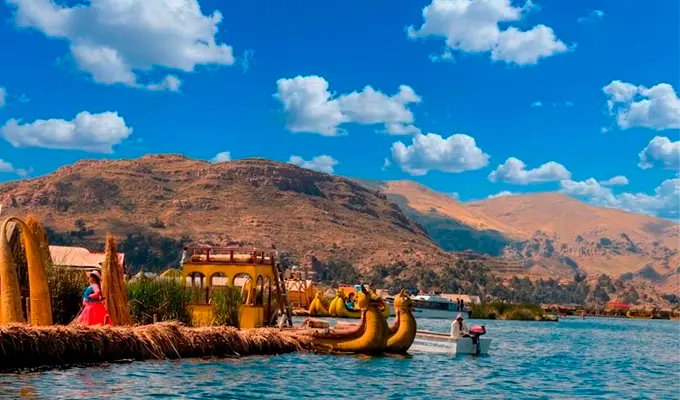
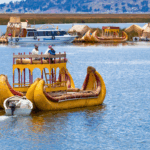
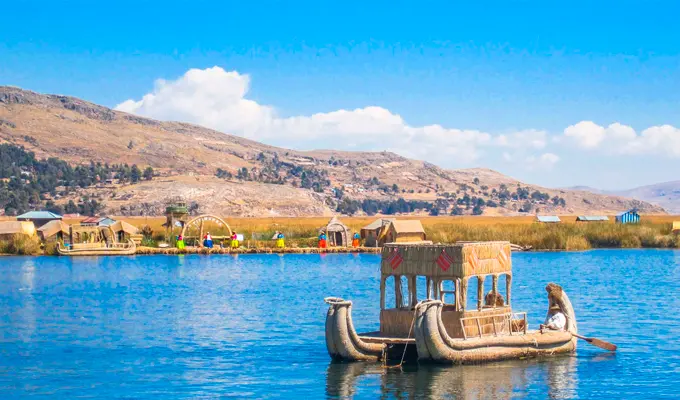
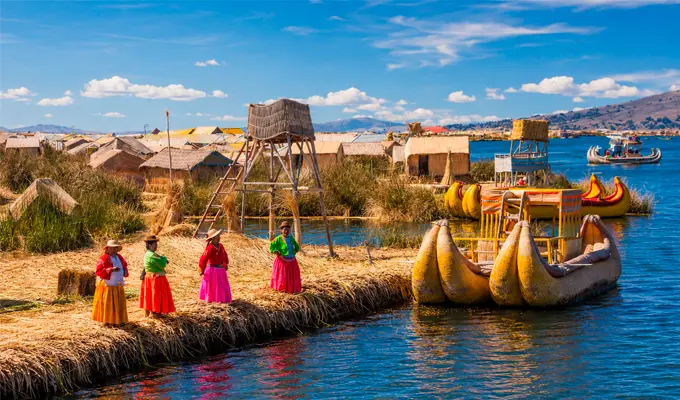
| Present-Day Importance | Lake Titicaca remains one of the top tourist destinations in Peru and Bolivia, featuring attractions such as the Uros Floating Islands, Taquile Island, and Amantaní Island, where ancient traditions and community-based tourism continue to thrive. |
Several ancient myths are associated with Lake Titicaca, including the following:
Long before the Inca Empire expanded across the Andes, several highly sophisticated cultures settled along the shores of Lake Titicaca, attracted by its abundant natural resources, favorable microclimate, and strategic location as a major regional trade hub.
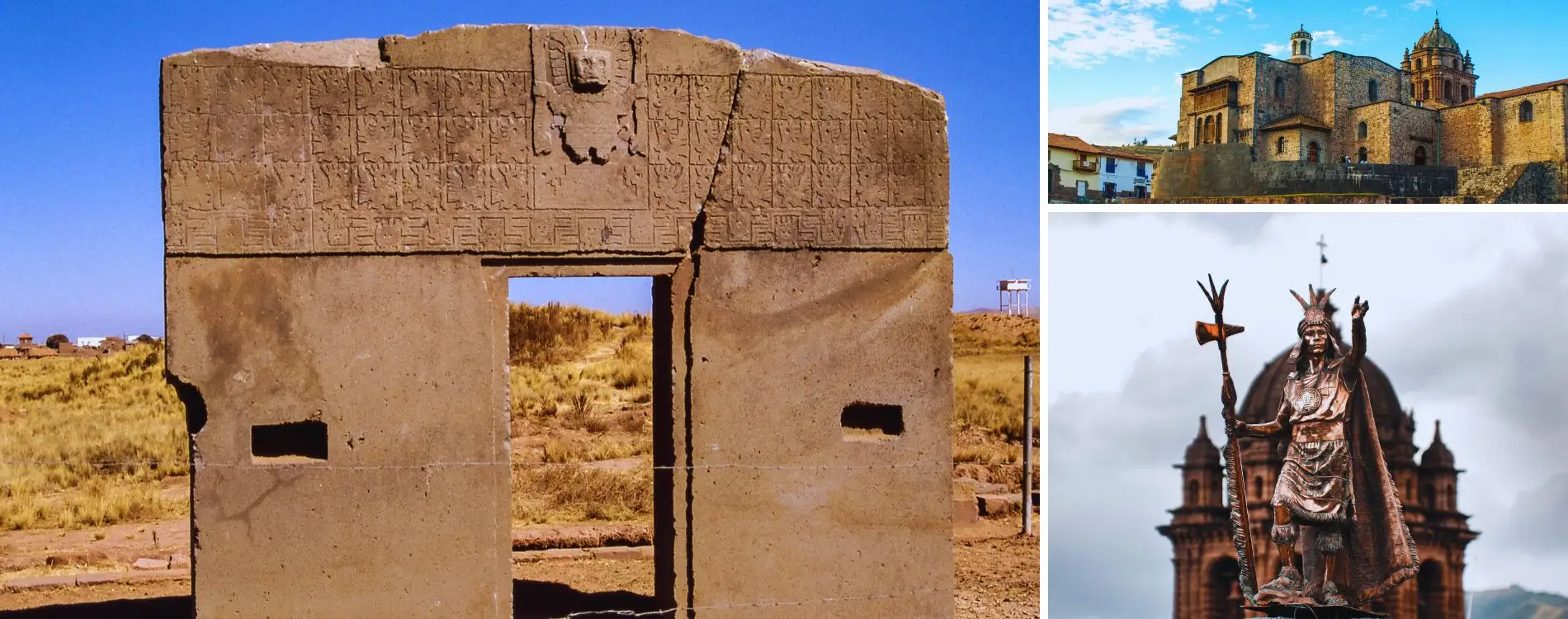
Archaeological research shows that human occupation of the Altiplano dates back thousands of years, evolving from early hunter-gatherer societies through formative cultures such as Chiripa and Pucará before reaching its greatest level of sophistication with the rise of the Tiwanaku State. Between approximately AD 600 and 1050, Tiwanaku transformed the Lake Titicaca Basin into one of the most important political, religious, and commercial centers in pre-Columbian South America.
To sustain a large population despite the harsh climate and frequent frosts of the Altiplano, Tiwanaku engineers developed advanced agricultural technologies, most notably the waru waru, or raised fields. This ingenious system of interconnected water channels surrounding elevated planting platforms acted as a natural thermal regulator, absorbing heat during the day and gradually releasing it at night to protect crops from freezing temperatures. Thanks to these innovations and their remarkable stone architecture, Tiwanaku became one of the most influential civilizations in pre-Hispanic South America, leaving behind a technological and cultural legacy that the Incas would later adopt and expand.
As the Incas expanded the borders of the Tahuantinsuyo into the Collasuyo region, they encountered a land where the sacredness of Lake Titicaca was already deeply rooted in the traditions and beliefs of local communities. Rather than suppressing these ancient customs, the rulers of Cusco demonstrated remarkable political and religious insight by incorporating existing myths into the official Inca worldview. In doing so, they strengthened the legitimacy of their own divine origin by linking it directly to the sacred birthplace of the Andean world.
To honor this spiritual connection, the Incas transformed the lakeshore into a magnificent center of state worship by building temples, shrines, and administrative complexes at strategic locations. Among these, the Island of the Sun (formerly known as the Island of Titiqaqa) became the most sacred ceremonial center in the entire empire. Members of the Inca elite—including the Sapa Inca himself—made pilgrimages to this sanctuary to pay tribute to the sacred rock where they believed the Sun first emerged.
The depth of this devotion is reflected not only in historical chronicles and the impressive ruins that remain on land, but also in the treasures preserved beneath the lake itself. Over the past few decades, underwater archaeological expeditions have uncovered extraordinary ritual offerings in areas such as the Khoa Reef, near the Island of the Sun. Among the most remarkable discoveries are:
The depths of Lake Titicaca conceal a fascinating underwater museum that continues to amaze archaeologists and researchers around the world. Far from revealing all its mysteries, the lake remains the focus of ongoing scientific investigations that constantly reshape our understanding of the ancient Andes.
During recent decades, advanced underwater archaeological expeditions have mapped and documented more than twenty submerged archaeological sites, recovering thousands of priceless pre-Hispanic artifacts that once belonged to the Tiwanaku and Inca civilizations. These discoveries demonstrate that centuries of fluctuating water levels, combined with the intentional practice of depositing ceremonial offerings beneath the lake, transformed its waters into one of the world's most sacred underwater repositories.
Among the most celebrated discoveries is an intact Inca stone offering box, recovered several meters below the surface at Khoa Reef. When conservation specialists carefully opened the container, they found:
Both artifacts carried profound symbolic meaning within the Inca Empire. Reserved exclusively for the imperial elite, they were closely associated with rituals of reciprocity, the legitimization of imperial authority, and ceremonies dedicated to the deities of water and fertility.
These remarkable underwater discoveries not only enrich the cultural heritage of Peru and Bolivia, but also provide compelling archaeological evidence that, for centuries, Lake Titicaca functioned as the most important sacred aquatic sanctuary in the Andes—a mystical place where the human and divine worlds met beneath the water's surface.
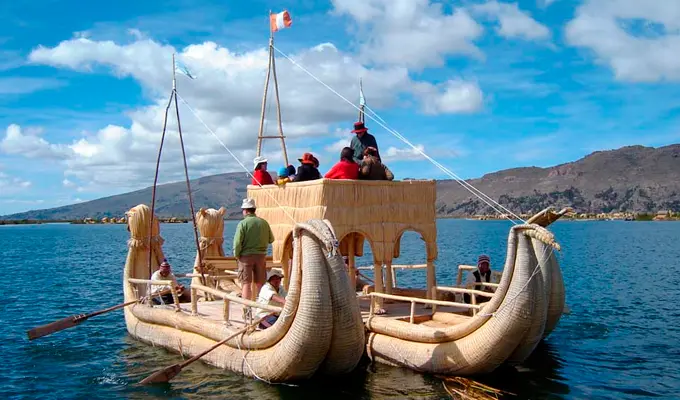
Exploring the lake's famous islands allows travelers to experience lifestyles that have endured for centuries. Three destinations stand out for their extraordinary cultural value:
Beyond its importance as a tourist destination, Lake Titicaca remains the cultural heart of the Quechua and Aymara peoples who inhabit its shores and peninsulas. For them, the lake is far more than a natural resource for fishing and agriculture—it is Mamacocha, a living sacred being deserving of respect, reciprocity, and reverence, just as it has been for thousands of years.
The historical significance of Lake Titicaca is truly extraordinary. More than simply a geographical landmark, it is a unique place where nature, mythology, archaeology, and living culture converge. Its importance can be understood through five exceptional characteristics: