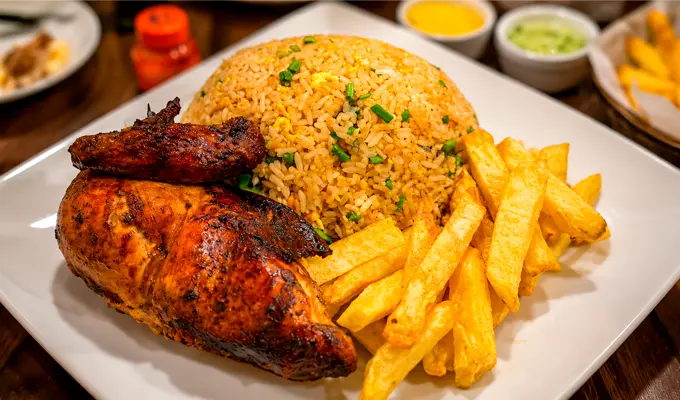
Talking about Peruvian Rotisserie Chicken (Pollo a la Brasa) means talking about one of Peru’s greatest culinary treasures. Its unmistakable aroma, perfectly golden and crispy skin, signature blend of spices, and the classic pairing of French fries and fresh salad have made it the favorite dish of millions of Peruvians. Its popularity is so remarkable that it has its own special day on the national calendar: Peruvian Rotisserie Chicken Day, a celebration that honors its cultural significance, its contribution to the country's economy, and, above all, its cherished place at the Peruvian table.
Peruvian Rotisserie Chicken Day is celebrated on the third Sunday of July throughout Peru. This commemorative date was established by the Peruvian government to pay tribute to one of the country's most iconic dishes while encouraging the consumption of local products. On this festive occasion, thousands of pollerías (rotisserie chicken restaurants) welcome families with special promotions, culinary events, and celebrations that bring people together to enjoy one of Peru's greatest gastronomic symbols.
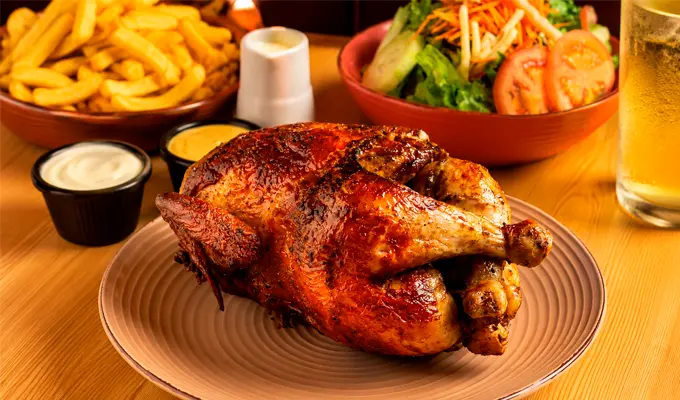
The story of Peruvian Rotisserie Chicken (Pollo a la Brasa) began in the 1950s, when Swiss immigrant Roger Schuler introduced an innovative way of roasting whole chickens by slowly turning them over charcoal embers. Together with engineer Franz Ulrich, he perfected the rotating oven that is now synonymous with this beloved dish, producing chicken with exceptionally juicy meat and irresistibly crispy skin.
Over the years, the original recipe evolved by incorporating distinctly Peruvian ingredients such as ají panca, garlic, soy sauce (sillao), cumin, and a carefully selected blend of spices. These flavors gave Pollo a la Brasa its unmistakable taste, making it one of Peru's most celebrated dishes and earning international recognition.
| Aspect | Key Information |
| National Celebration | Peruvian Rotisserie Chicken Day is celebrated on the third Sunday of July throughout Peru to honor one of the country's most iconic dishes. |
| Origin and History | It originated in the 1950s, when Roger Schuler and Franz Ulrich developed the rotating oven that revolutionized the preparation of Pollo a la Brasa. |
| Signature Flavor | Its distinctive taste comes from a marinade made with ají panca, garlic, soy sauce, cumin, and other spices, combined with slow roasting that creates juicy meat and crispy skin. |
| Symbol of Peruvian Cuisine | It is one of Peru's most popular dishes and was declared National Cultural Heritage in 2010, recognizing its cultural and economic importance. |
| Importance of the Celebration | This day honors the work of farmers, poultry producers, chefs, and entrepreneurs while promoting the consumption of Peruvian products and strengthening the country's gastronomic identity. |
The true success of Peruvian Rotisserie Chicken (Pollo a la Brasa) lies in its perfect combination of tradition, expert technique, and high-quality ingredients. It all begins with a marinade that rests for several hours, allowing the spices to fully penetrate the meat before it is slowly roasted over charcoal or in the iconic rotisserie ovens that have become synonymous with this beloved dish.
Of course, the experience would not be complete without its classic accompaniments: crispy golden French fries, a fresh salad, and the traditional selection of sauces, where ají sauce, mayonnaise, and spicy rocoto sauce take center stage.
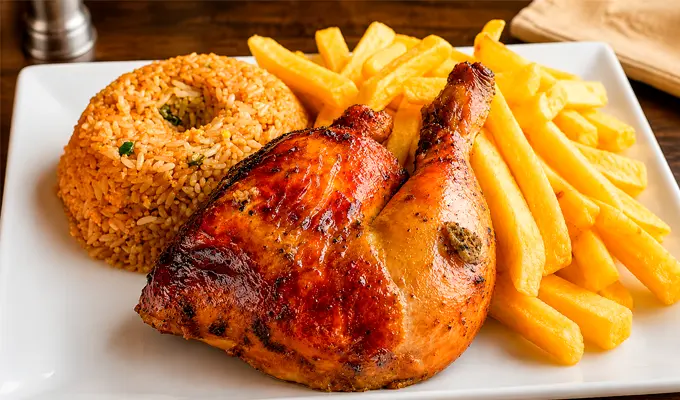
More than just a meal, Peruvian Rotisserie Chicken has become a cherished family tradition. It is the centerpiece of family gatherings, birthdays, celebrations, and weekend meals, making it one of the most beloved and widely enjoyed dishes throughout Peru.
Its cultural impact is so significant that in 2010, it was officially declared National Cultural Heritage of Peru. This recognition highlights not only its importance to Peru's national identity but also its major contribution to the country's economy, supporting thousands of farmers, producers, restaurants, and entrepreneurs.
Peruvian Rotisserie Chicken Day is the perfect opportunity to recognize the dedication of the thousands of poultry farmers, agricultural producers, chefs, and entrepreneurs who make this iconic dish possible. It also encourages the consumption of local products while preserving a culinary tradition that has won the hearts of both Peruvians and international visitors.
Every year, this celebration reminds us that Pollo a la Brasa is far more than just a recipe—it is a true symbol of unity, national identity, and Peruvian pride, bringing people together around one of the country's greatest culinary traditions.