Every October, Lima takes on a different character. The streets turn purple, the aroma of freshly baked turrón fills the air, and the sound of religious songs sets the rhythm of the city. It is the time when thousands of people accompany the Lord of Miracles in one of the largest expressions of faith in the world.
This devotion began during the colonial era, when an Angolan slave painted a crucified Christ on a humble adobe wall in Pachacamilla. Powerful earthquakes destroyed much of the city, but that wall remained standing, giving rise to a devotion that, over the centuries, crossed borders around the world.
Join us as we discover the history of the “Brown Christ”: its origins, the tradition of its processions, the meaning behind the purple habit, and the traditional cuisine that accompanies this very special month.
| Fact | Information |
| Main celebration | October |
| Popular name | Brown Christ |
| Main city | Lima |
| Place of origin | Pachacamilla, Lima |
| Characteristic color | Purple |
| Main activity | Procession |
| Signature dish | Doña Pepa Turrón |
| Main sanctuary | Las Nazarenas |
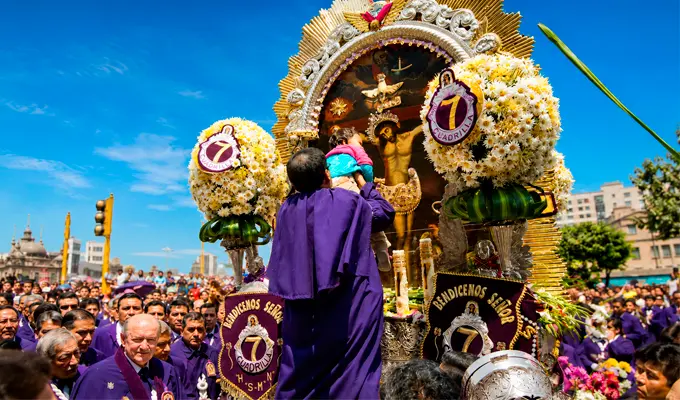
For Peruvians, the Lord of Miracles, affectionately known as the “Brown Christ”, is much more than a religious image: it is a powerful presence that brings the city to a standstill and makes the country beat as one.
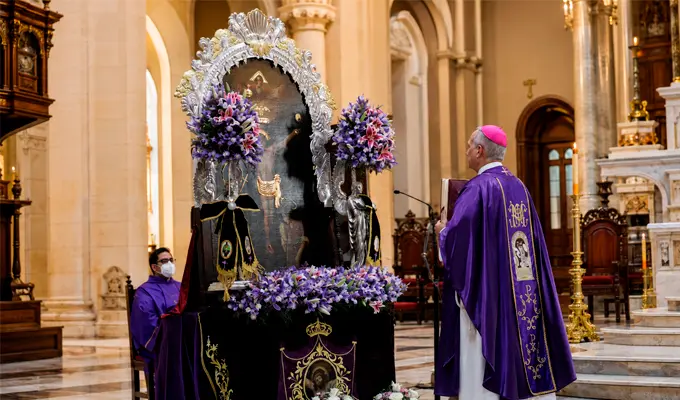
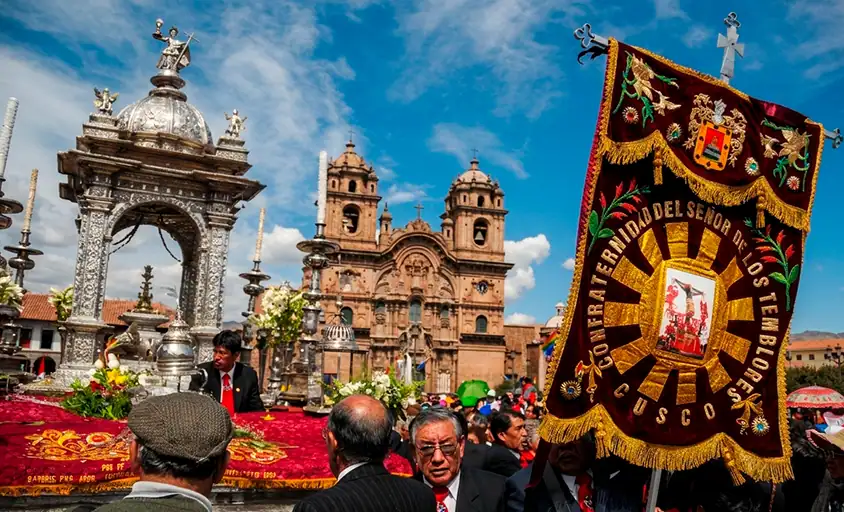
Its celebration comes alive every October, when the heavy silver litter is carried through the streets on the shoulders of its bearers. A sea of people dressed in purple accompanies it along the way, amid prayers, moving chants, clouds of incense, and tears of gratitude for fulfilled promises.
However, this celebration transcended the spiritual realm a long time ago. Today, it is a collective embrace, a living tradition where faith, culture, and history come together, reminding us of who we are and where we come from every time the Christ of Pachacamilla walks once again among his people.
The history of the Lord of Miracles dates back to the 17th century, during the colonial era.
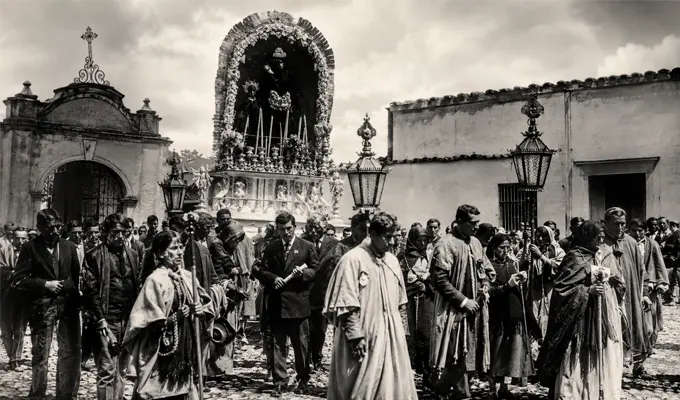
According to tradition documented by various sources, in 1651, an Angolan slave named Pedro Dalcón painted an image of Christ crucified on an adobe wall in the Pachacamilla neighborhood of Lima.
The image began to be venerated by the local population. Later, an event that profoundly shaped the history of this devotion was the earthquake that struck Lima and Callao.
Tradition holds that, despite the destruction caused by the earthquakes, the wall on which the image was painted remained standing. This event strengthened the devotion of those who came to venerate it. Over the years, the devotion spread and eventually became one of the most important religious expressions in Peru.
The nickname "Brown Christ" carries within it the very essence of its origins: the indelible influence of the Afro-descendant community of colonial Lima. It was this community who, through humble brushstrokes and heartfelt chants, brought the image to life on that wall in Pachacamilla and carefully preserved its early miracles.
Over the years, the devotion that was born on the outskirts of the city crossed all social, racial, and economic boundaries. Today, the Lord of Miracles is a great meeting point for Peruvians: a fraternal embrace where all stories come together beneath the same purple habit.
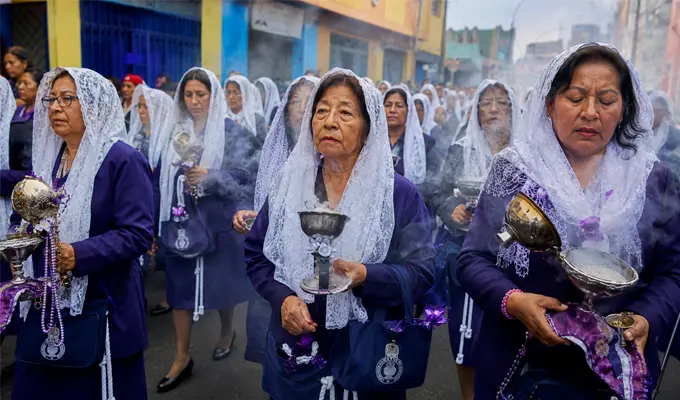
If there is something that completely transforms the atmosphere of Lima every October, it is the purple mantle that seems to cover everything. It is not simply a color: it is the robe of faith, gratitude, and penance worn by thousands of devotees to fulfill a promise or give thanks for a granted miracle.
During this month, the capital city changes its appearance. Purple not only dresses the faithful; it decorates balconies, colors floral arrangements, flies from banners, and fills the city's streets and corners. Watching the processions pass through clouds of incense is to witness an entire city slowing down its usual pace to breathe in devotion, tradition, and a very special sense of peace that can only be felt during these days.
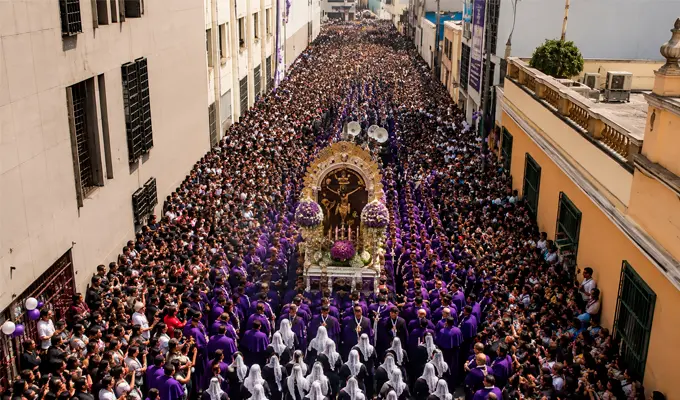
The procession is the very heart of the celebration, the moment when faith takes to the streets. Following the procession is not simply about watching a religious image pass by; for thousands of devotees, it is an act of pure love, a slow-paced walk to give thanks, heal wounds, and renew promises with their eyes turned toward heaven.
This immense human tide moves forward thanks to the dedication of thousands of people who make this collective expression of faith possible:
If there is one image that defines Lima in October, it is that of its people wearing the purple habit. Wearing this loose-fitting robe with a white cord is not simply a tradition; it is an intimate act of humility, gratitude, and penance. For thousands of devotees, putting it on every morning throughout the month is the most sincere way to say "thank you" for a granted miracle or to faithfully fulfill a promise made from the heart.
Over the years, this simple robe ceased to be merely a garment and became the very identity of the celebration. It is the visual symbol of a people who, regardless of where they come from, put on the same color to walk together in the same faith.
Step by step, the arrival of the Lord of Miracles awakens a wave of creativity and devotion that transforms the gray asphalt into a celebration of color. The famous floral carpets are true works of ephemeral art: entire families and neighborhoods stay up late designing the carpets with flower petals, colored sawdust, and foliage along the route where the platform will pass, knowing that hours of work will last only a few seconds beneath the footsteps of the procession.
Along the procession route, the façades also tell their own story. Balconies decorated with purple fabrics, improvised altars in windows, burning candles, and vases overflowing with carnations welcome the Brown Christ. These are simple yet deeply meaningful gestures, as each household opens its doors to become another small part of this great community celebration.
Devotion to the Brown Christ is not experienced only during the procession; it is felt every day throughout the month. The Las Nazarenas Sanctuary, in the heart of Lima, becomes the city's great spiritual epicenter.
There, from early in the morning, the church opens its doors to receive an endless stream of faithful who come to attend Mass, spend a few minutes in quiet prayer during the novena, or participate in moving nighttime vigils. These are more intimate and contemplative moments, when, surrounded by the scent of melted wax and the soft glow of candles, devotees take a moment to pause, release the burdens of the year, pray with their families, and renew the unwavering faith that sustains them.
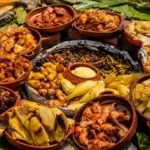
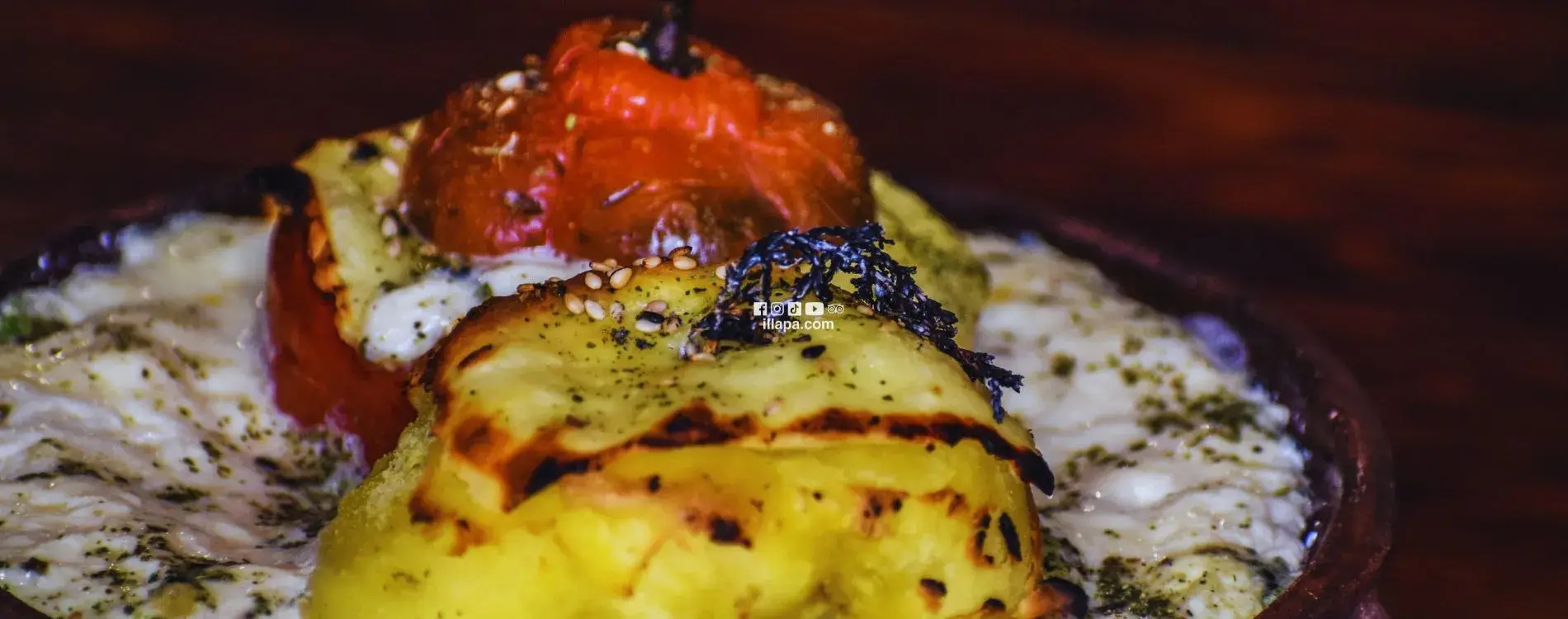
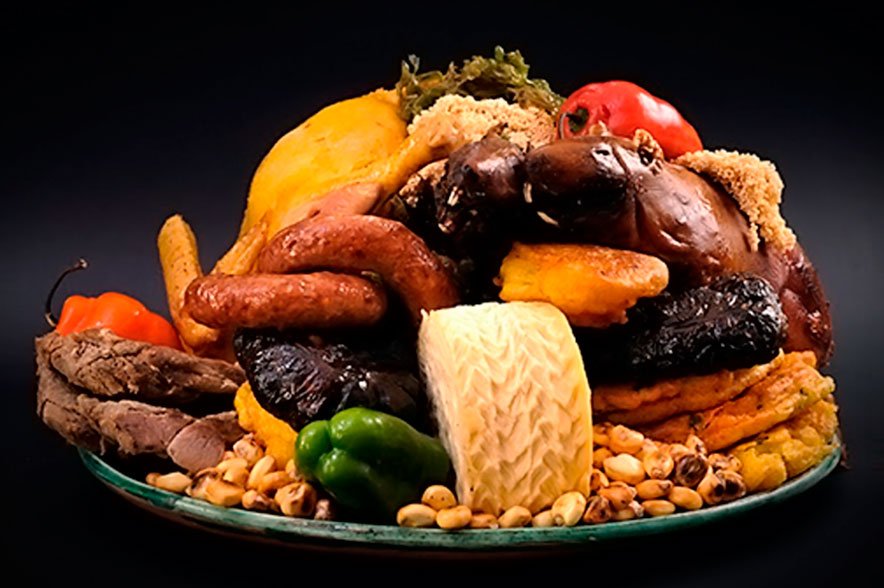
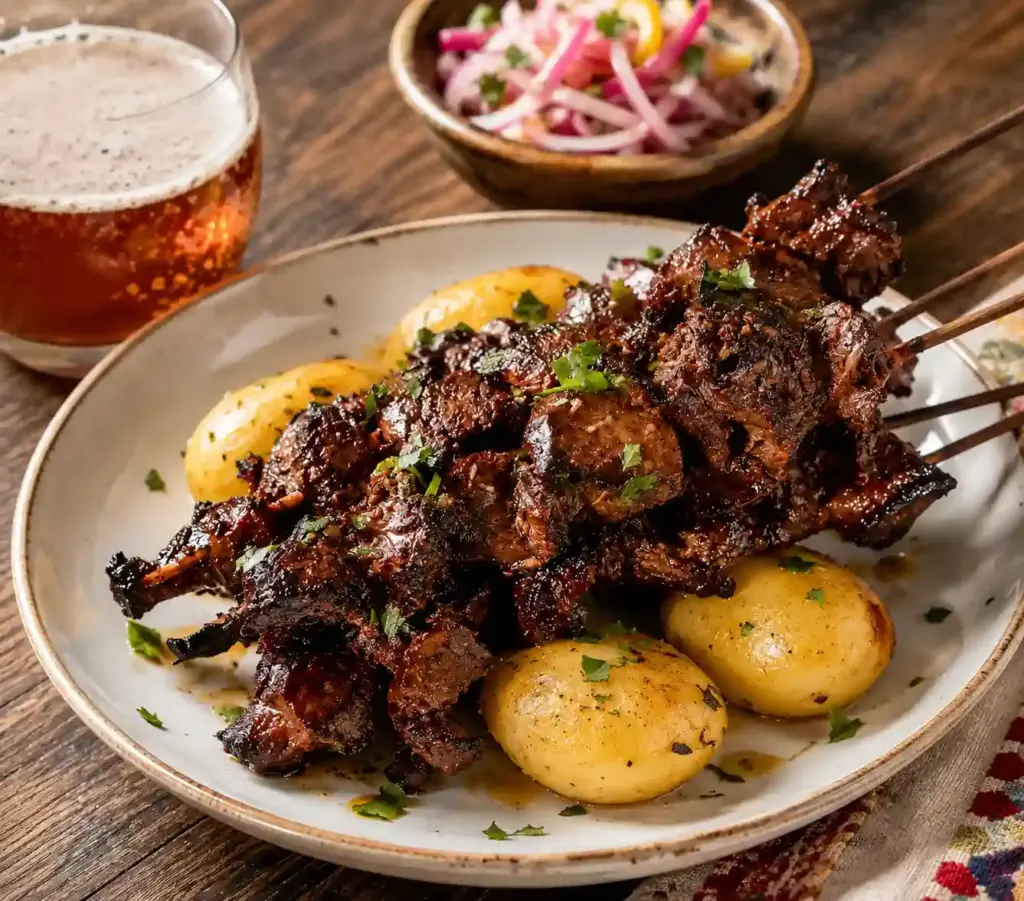
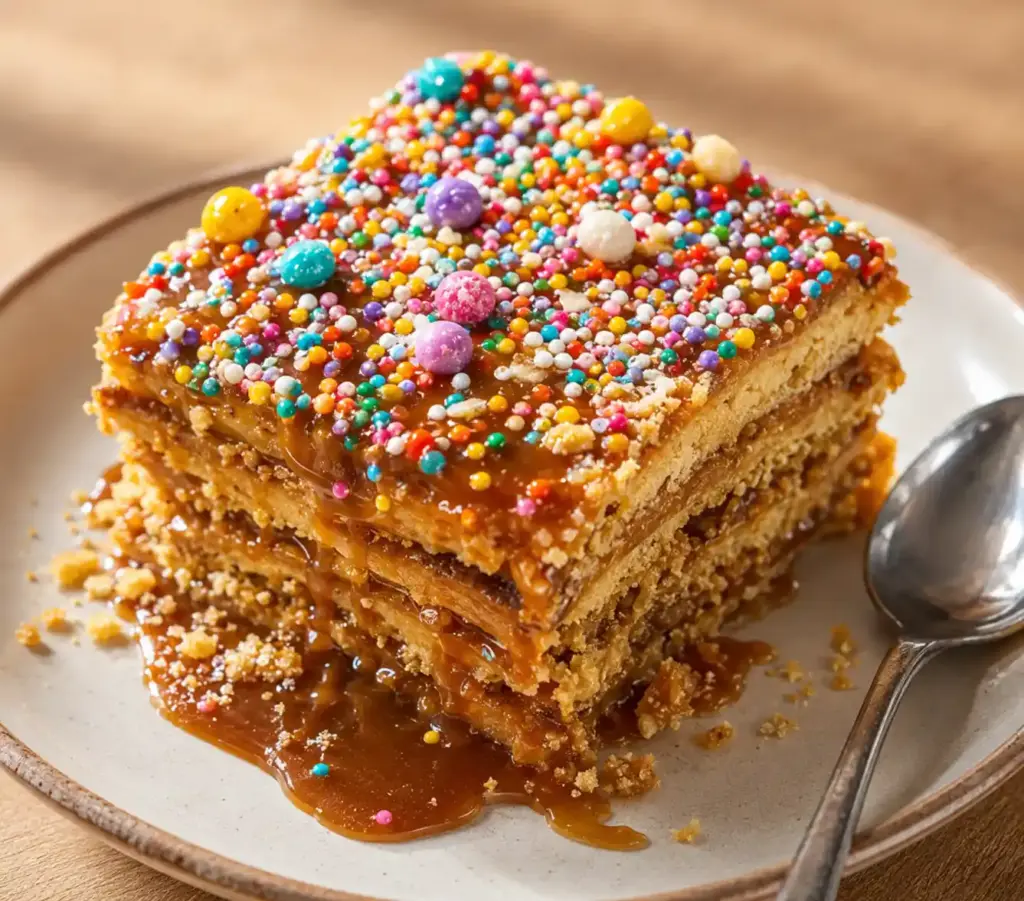
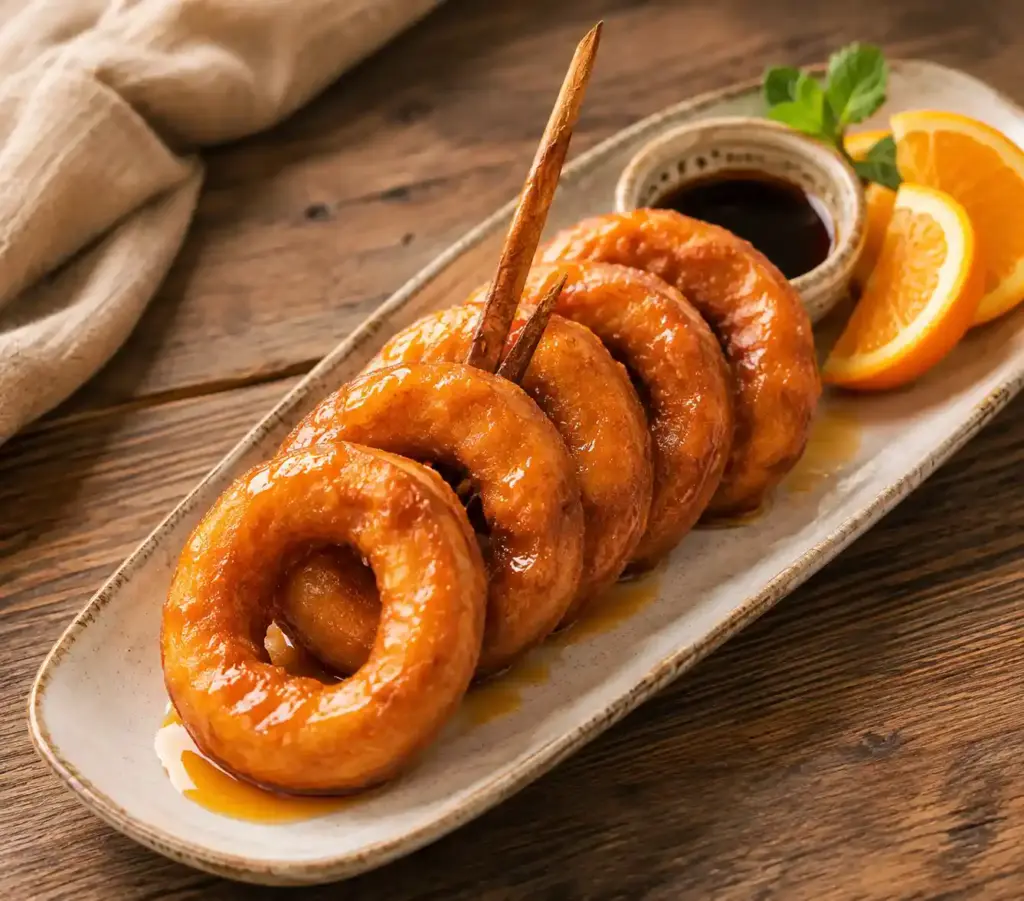
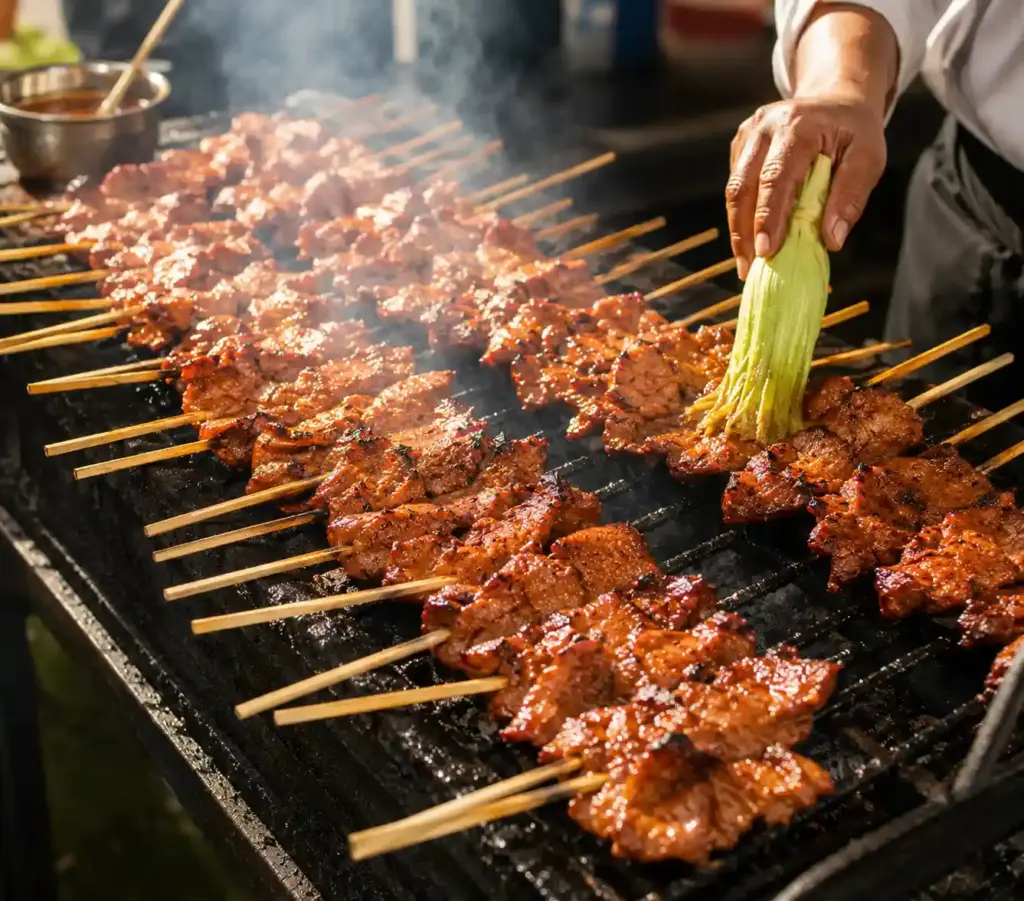
The Purple Month is not only experienced with the heart and the ears; it is also enjoyed through the palate. The celebration of the Lord of Miracles has its own distinctive flavor and unmistakable aromas that fill the streets and accompany families throughout their journey.
Although Lima is the birthplace and natural epicenter of this devotion, faith in the Brown Christ crossed every border long ago. In almost every corner of Peru, and even in cities around the world where a Peruvian heart beats, from Buenos Aires to Madrid and New Jersey, the purple color blooms again every October. Each community organizes its own processions, Masses, and incense ceremonies, adapting the tradition with the warmth and affection of its own local culture.
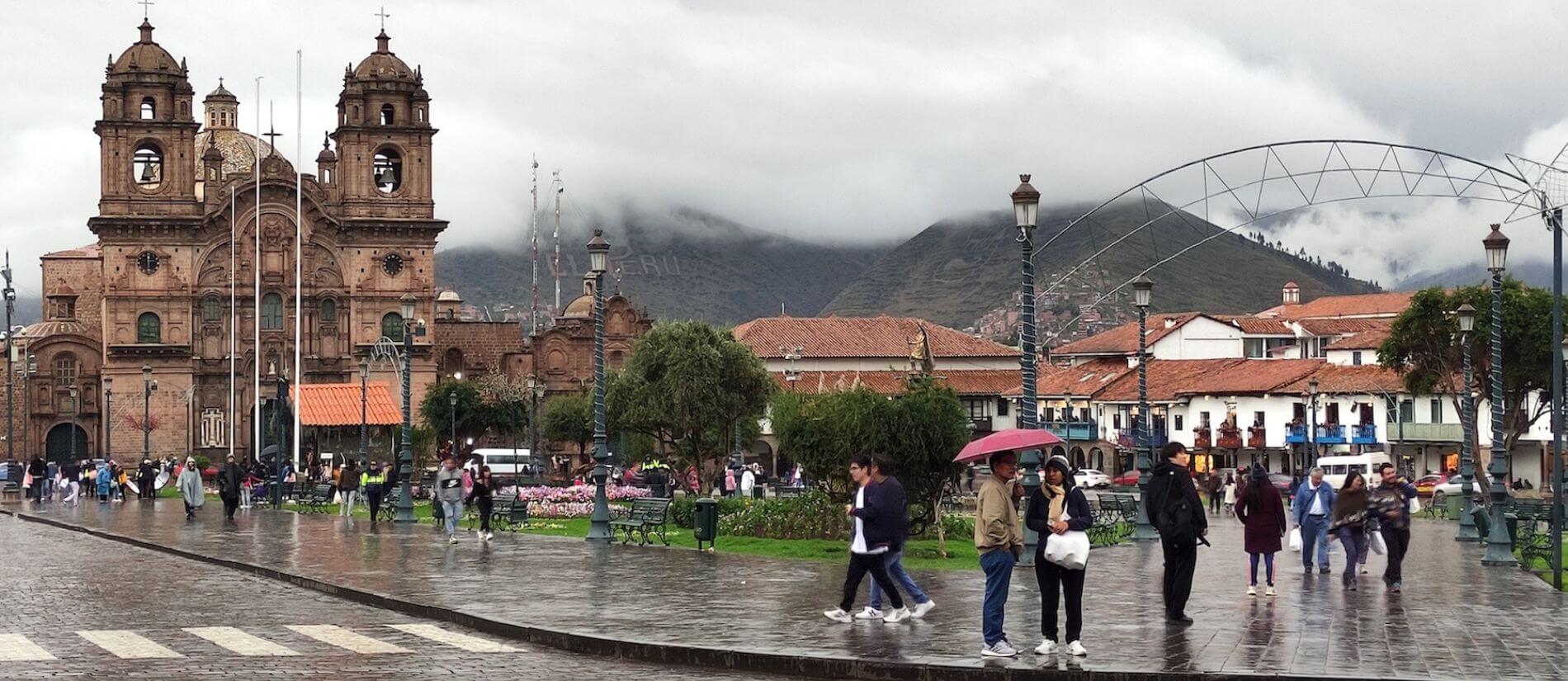
However, the heart of this celebration remains firmly connected to the old streets of Lima's Historic Center. Returning to the Las Nazarenas Sanctuary, feeling the weight of history in its walls, and seeing the sea of people gathering to watch the platform pass by is a unique experience. Lima remains the great magnet that brings people together and reminds an entire country that, no matter how far apart we may be, the same faith brings us together every October.
Beyond candles and faith, this celebration is a living reflection of who we are as a country. At its origins lies the strong influence of Afro-Peruvian heritage: it was the hands of Afro-Peruvian devotees that painted Christ on an adobe wall that no earthquake could bring down. Over the centuries, this devotion embraced the voices, struggles, and hopes of all the communities that coexist in Peru.
In a world that often moves in different directions and at a relentless pace, the Purple Month works its own miracle by bringing everyone together on the same street corner: grandparents and grandchildren, the wealthy and the humble, those who come to ask for a favor and those who come to give thanks. That is why experiencing this celebration is not just witnessing an act of faith; it is a way of touching the country's mestizo heart, reconnecting with our roots, and understanding how our deepest traditions are what keep us united.
If you are in Lima in October, you will experience the city at its most authentic. Don't miss these experiences:
To make the most of this experience and enjoy it peacefully, keep these practical tips in mind:
It is mainly celebrated in October, known as the Purple Month, although activities begin in late September and continue until early November.
Because the original image was painted on an adobe wall by an Angolan enslaved man in the 17th century, highlighting its deep Afro-Peruvian roots.
The purple habit is a personal symbol of faith, penance, and gratitude for promises fulfilled or miracles received.
The traditional sweet is Turrón de Doña Pepa, made with a soft dough, chancaca syrup, and colorful sprinkles.
The procession travels through various streets and avenues in Lima's Historic Center. It is recommended to check the official route map and schedules for each year before attending.