The Corpus Christi in Cusco is a Catholic-Inca religious celebration of the Body of Christ. This festival takes place annually with devotion, music, dance, and native cuisine of Cusco. It does not have a fixed date and depends on the date of Easter Week.
Corpus Christi is a cultural religious festival meaning "Body of Christ". It is a celebration that blends Catholic traditions with the practices and beliefs of the Andean peoples, demonstrating the devotion of the faithful.
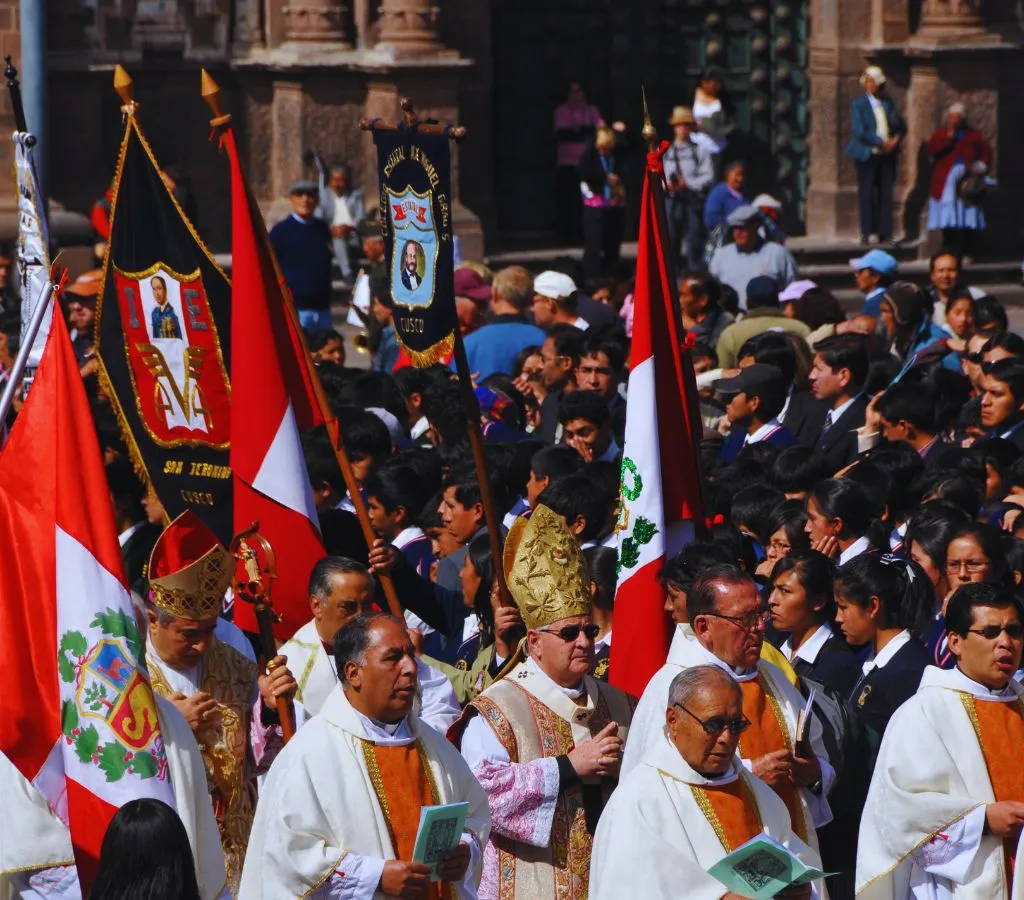
Corpus Christi is celebrated annually 9 weeks after Holy Thursday (Easter Week) and features 15 saints who leave their church or temple from various parts of Cusco in a procession accompanied by music, dances, and regional cuisine, heading together with their devotees to the Main Square of Cusco.
Corpus Christi is a Catholic religious activity honoring the presence of Christ in the Holy Eucharist. This festival gains significant relevance in Cusco's culture as a celebration to honor the Inti (Sun).
The Cusco Corpus Christi began in the Inca era, with festivals dedicated to ancestors and gods such as Tayta Inti, the goddess Killa, Kuychi, etc., where the mummies of high sovereigns were paraded. Later, with the arrival of the Spaniards and evangelization, it was decided to replace the procession of mummies with the procession of 15 saints.
Corpus Christi is celebrated worldwide in the Catholic religion; however, the Cusco Corpus Christi is a unique cultural celebration of the body and blood of Christ.
Corpus Christi involves significant organization by the Mayordomos or Carguyoc, who are chosen each year and are responsible for funding each of their Saints.
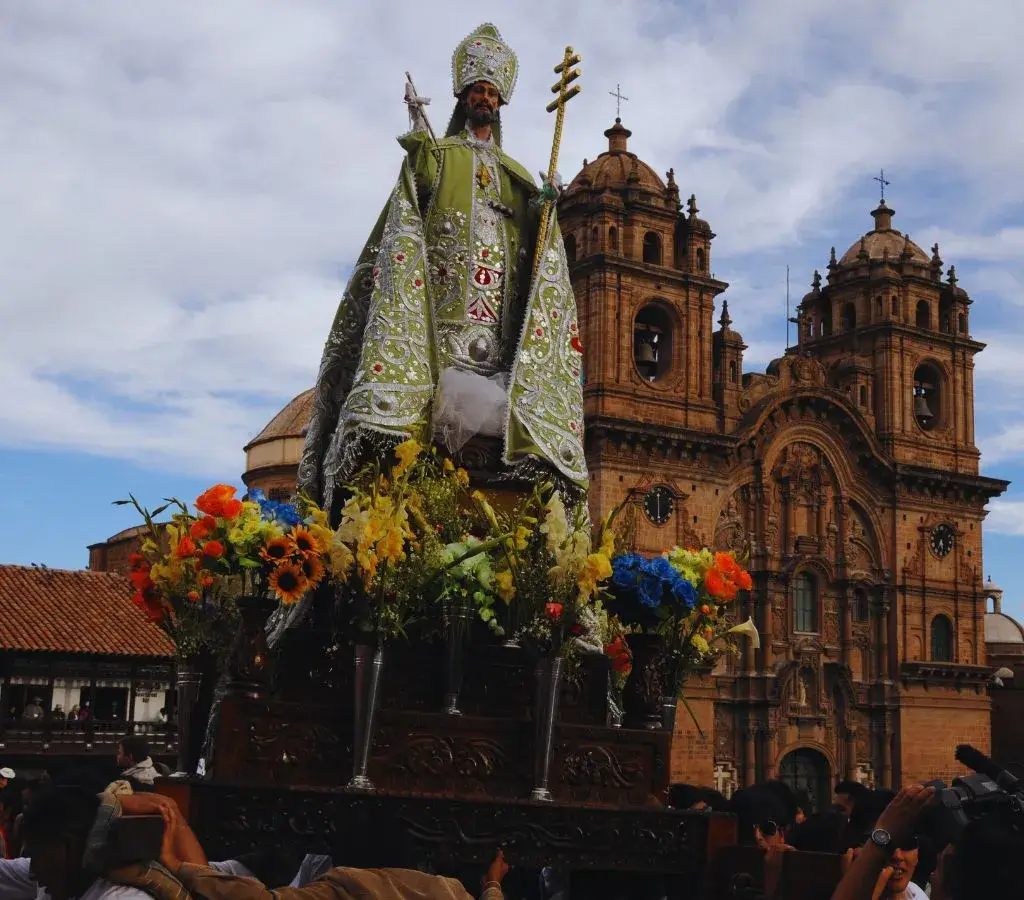
The celebration includes several stages, the first taking place with the departure of the 15 saints from their respective churches or temples to the Cathedral of Cusco:
Each Saint's destination is the Santa Clara Arch, then to the Church of San Pedro, where the symbolic handover of the cathedral keys from San Pedro to San Antonio takes place, followed by a mass. Then, all other saints start a procession towards the Cathedral where they remain for a week.
The octave is the date 8 days after Corpus Christi when the procession of the 15 saints around the Main Square takes place. It commonly starts in the afternoon after lunch.
The descent of the Saints is the day after the octave, consisting of the return of the Saints to their respective churches or temples with the appropriate protocol for each saint, showcasing their culture.
Corpus Christi is characterized by its rich cuisine, which is another major attraction of this festival. The dishes served during this time include:
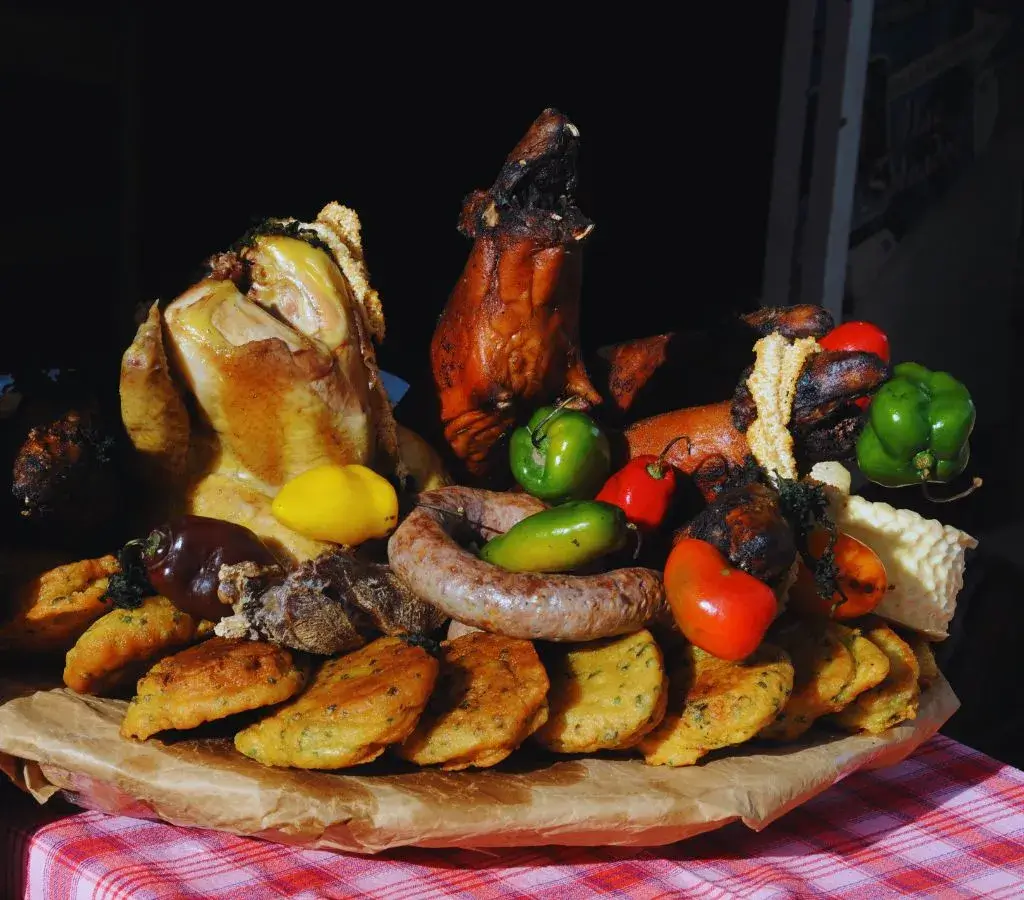
Chiri Uchu is the emblematic dish of the Corpus Christi festival, which means Chiri = cold and Uchu = chili. This dish dates back to the Inca and colonial era and represents the duality of the Inca culture, being served cold as an offering to the sun, which represents heat.
Its ingredients include boiled chicken, oven-roasted guinea pig, dried meat or chalona, flour pancakes, toasted corn, blood sausage, chorizo, cheese, seaweed or cochayuyo, fish roe, and chili to taste, all served cold and ready to enjoy.
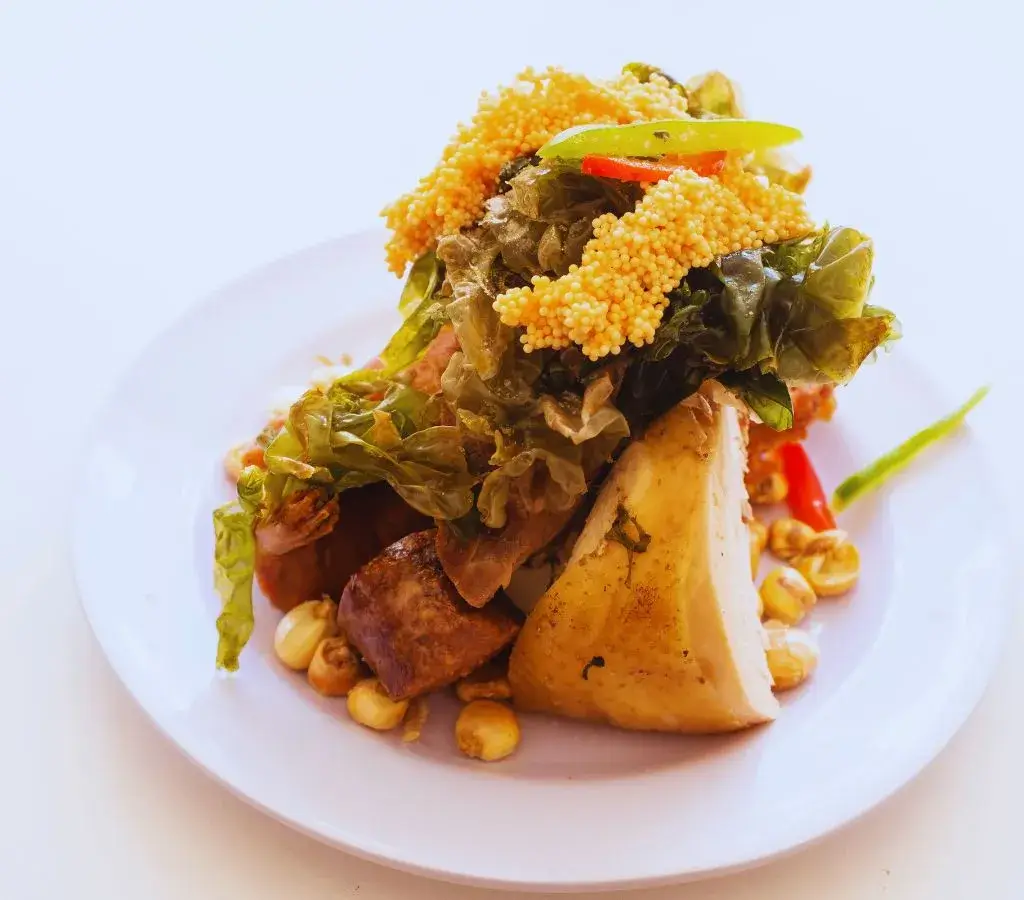
Cuy Chactado is another highly consumed dish in this significant Cusco festival. It involves boiling a guinea pig and then seasoning it with local spices before final baking in an oven.
It can be served with rice, potatoes, salad, fried yucca, and a typical drink from Cusco.
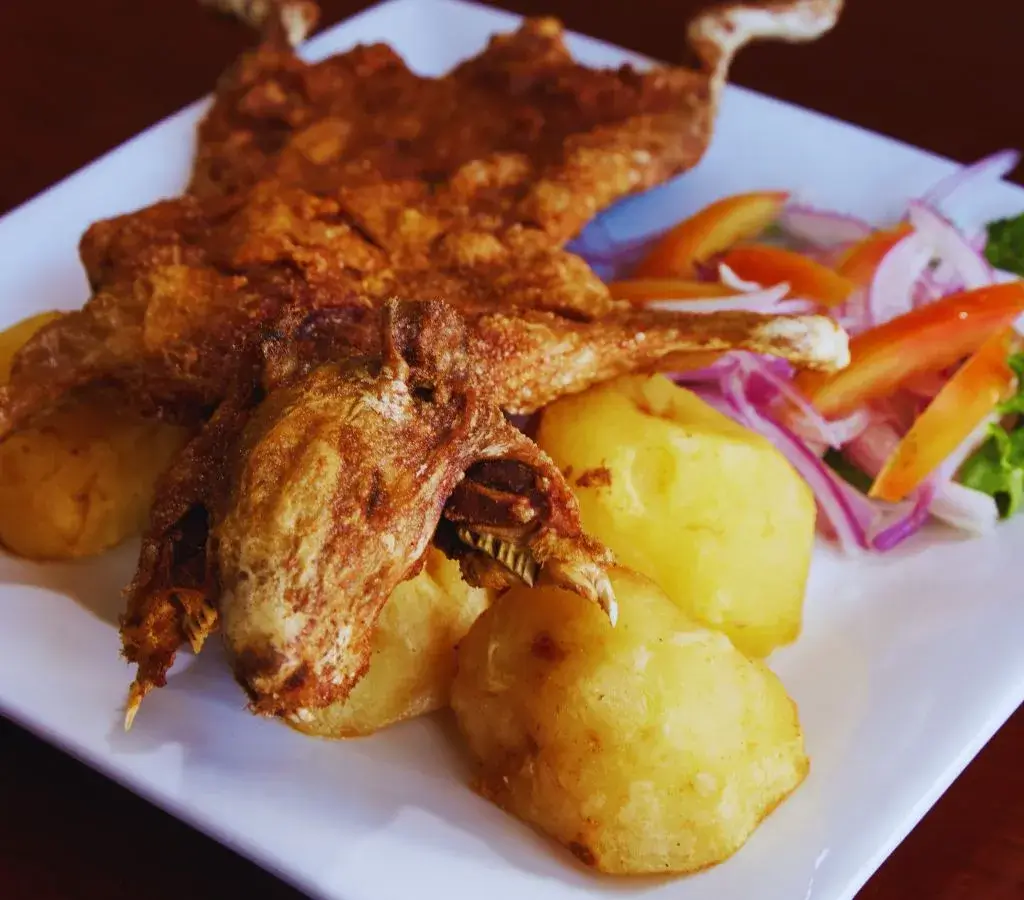
Chactado
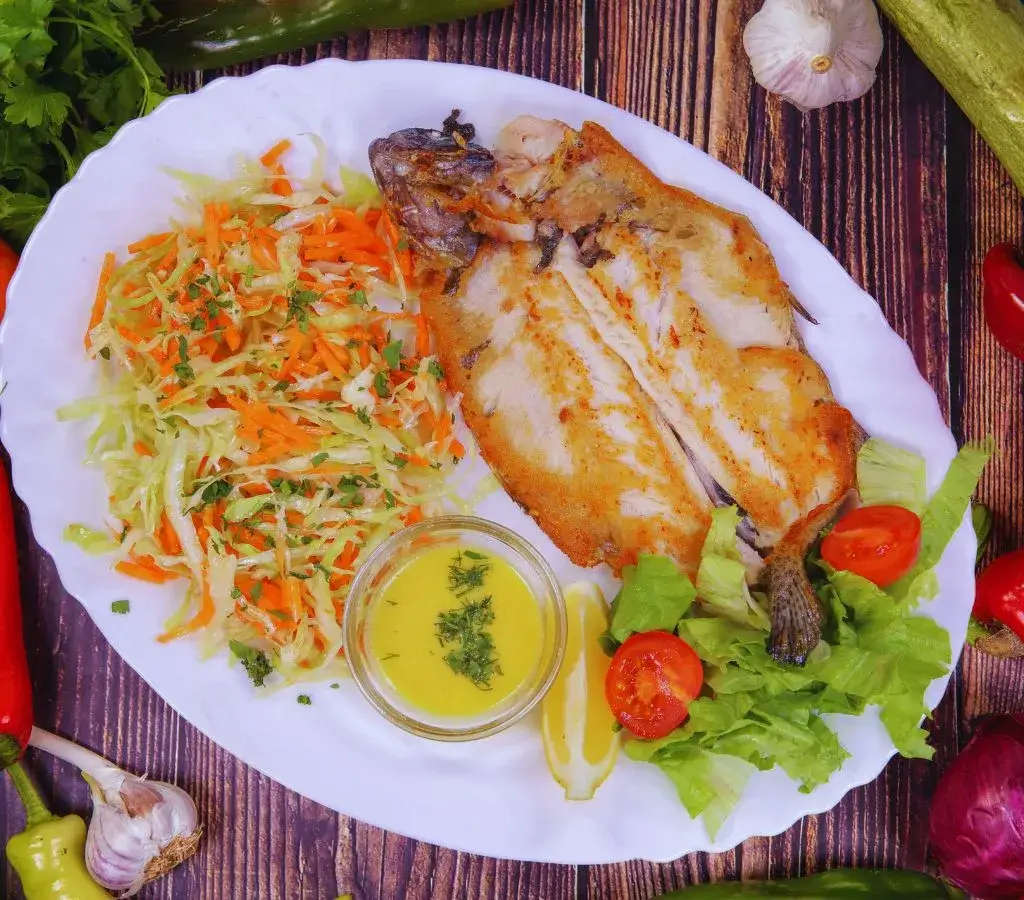
The Cusco fried trout is prepared using either river or sea trout. This typical dish is served fried alongside rice, yucca, and optionally with a criolla sauce.
This dish can be found at any time in the country restaurants of the city.
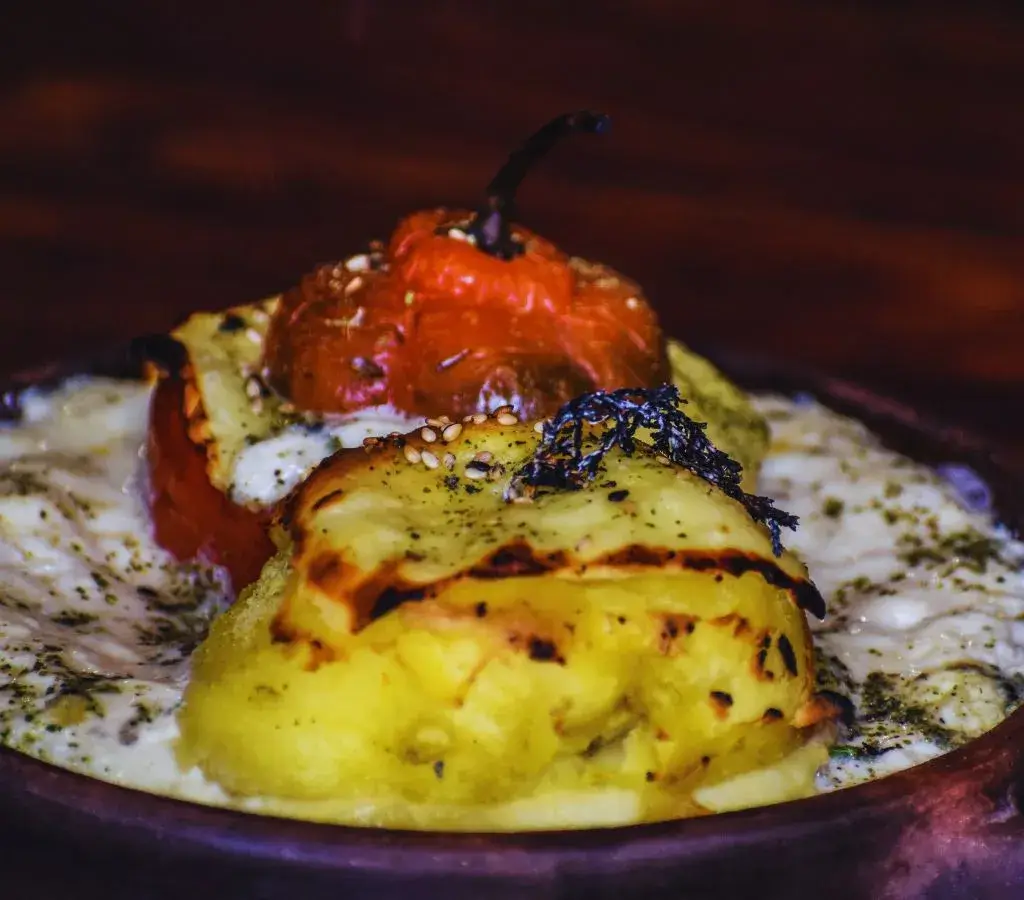
The stuffed rocoto is another typical dish of this festival, made from a round-shaped spicy rocoto pepper. It is prepared by removing the veins and seeds and then stuffed with beef, peanuts, chopped onion, and cooked in a pan.
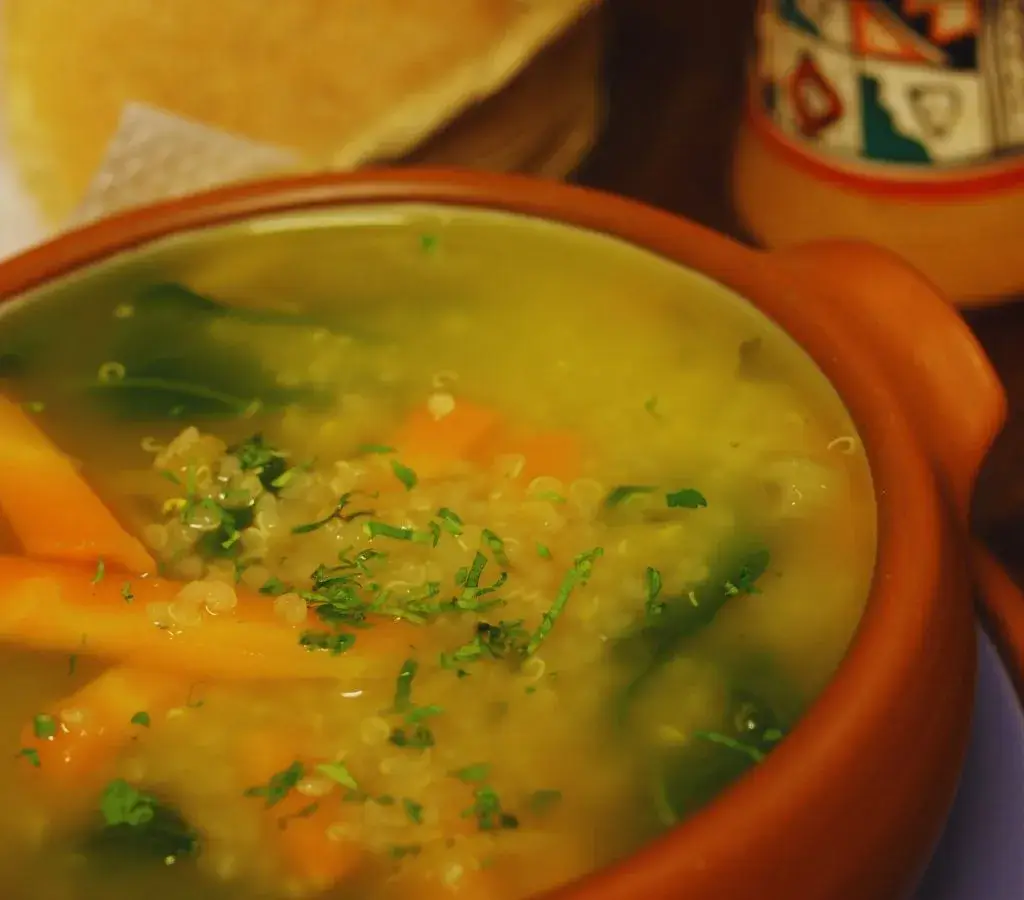
Quinoa soup is one of the many varieties of soups prepared in Cusco.
This soup is favored by visitors for its nutritional value, pleasant taste, lightness, and is mostly consumed in cold seasons.
It is recommended for those acclimatizing to avoid altitude sickness and also because it is not heavy on the stomach.
In Cusco, there is a wide variety of fruits that grow in its different provinces according to their climate. During this season, it is common to consume cherimoya, coconut, and sugarcane, which are available throughout the duration of the festival.
```
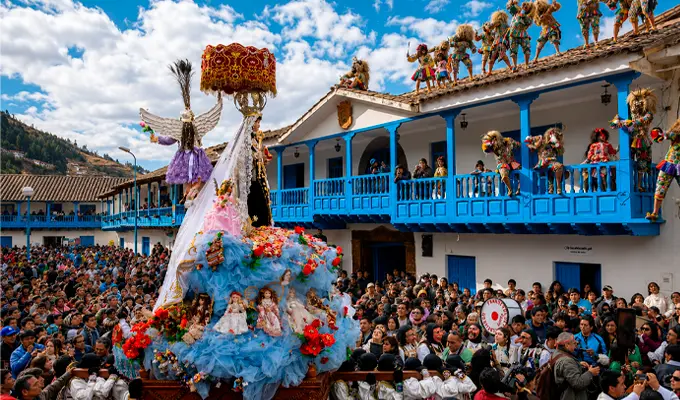
Every July, the picturesque town of Paucartambo, in the Cusco region, is completely transformed. Its colonial streets are filled with music, color, and overflowing devotion as locals celebrate the feast of Our Lady of Mount Carmel, affectionately known by her faithful followers as Mamacha Carmen.
Widely regarded as one of the most important cultural and religious celebrations in all of Peru, this festival attracts thousands of devotees, traditional musicians, spectacular dance troupes, and travelers from around the world. They all come for the same purpose: to immerse themselves in a unique experience where faith, living history, and Andean folklore come together in an unforgettable celebration that beats at the heart of Cusco.
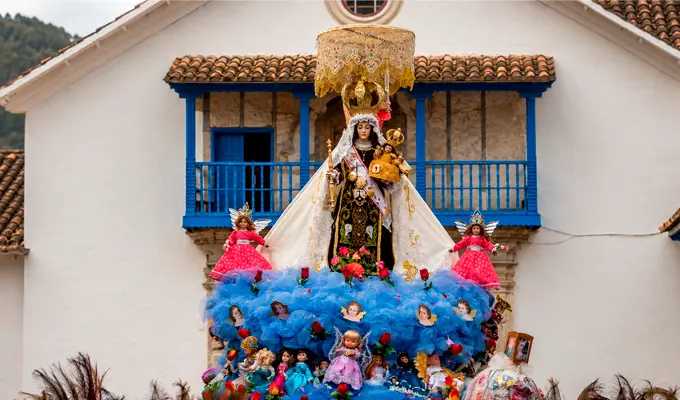
Devotion to Our Lady of Mount Carmel originated on Mount Carmel in Israel, where the Carmelite Order was founded. According to tradition, on July 16, 1251, the Virgin Mary appeared to Saint Simon Stock and presented him with the Brown Scapular as a symbol of protection and faith. From that moment on, her devotion spread throughout Europe and eventually reached Peru during the colonial period through the Carmelite friars.
Over time, Andean communities incorporated their own customs and traditions into the celebration, creating a unique cultural syncretism. In Paucartambo, the Virgin is lovingly known as Mamacha Carmen and is revered as the town’s protector. For more than 300 years, thousands of faithful devotees have gathered every July to honor her in one of Peru’s most important religious and cultural festivals.
The Festival of Our Lady of Mount Carmel is celebrated in many parts of the world, including Spain, Latin America, and various regions of Peru such as Lima, Ancash, Callao, and Cusco.
In Cusco, the main celebration takes place in the province of Paucartambo, located southeast of the Andes Mountains, about four hours from the city of Cusco. Although the central day of the festival is July 16, the festivities extend from July 15 to July 18.
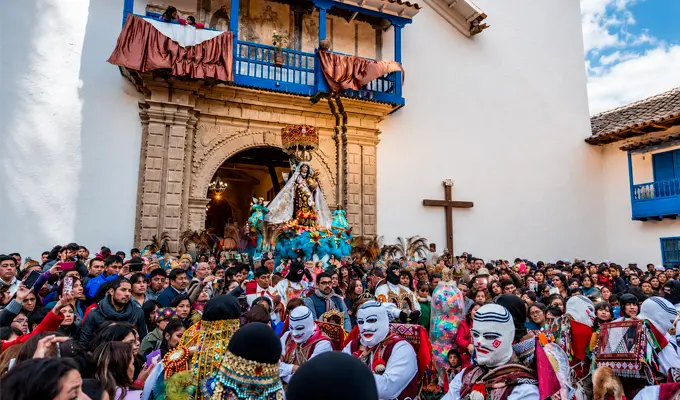
The Festival of Our Lady of Mount Carmel of Paucartambo is celebrated every year from July 15 to July 18, with July 16 serving as the main day of the festivities. During these four days, the town’s colonial streets come alive with music, traditional dances, religious processions, and profound devotion, transforming Paucartambo into one of Cusco’s most important cultural destinations.
The celebration begins on July 15 with the traditional Entrance of the Dance Troupes, when groups such as the Maqtas, Qhapaq Qolla, Qhapaq Ch'unchu, Majeños, and Chukchus arrive in town wearing colorful costumes and performing symbolic cultural representations.
July 16, the main day of the festival, begins with the traditional Dawn Mass, followed by the solemn Mass in honor of Mamacha Carmen. Afterward, the dance troupes parade through the streets while locals and visitors enjoy the celebration from plazas and balconies. According to local tradition, the Virgin’s facial expression during the procession is believed to foretell good or bad omens for the coming year.
July 17 is dedicated to remembering the carguyoqs (festival sponsors) and members of the dance troupes who have passed away. In the afternoon, the Virgin is carried in procession to the historic Carlos III Bridge, where hundreds of faithful gather to receive her blessing.
Finally, July 18 marks the closing of the festival. The dance troupes bid farewell to the Virgin until the following year, and her image returns to the church, bringing four unforgettable days of faith, tradition, and one of Peru's most iconic cultural celebrations to an end.
| Aspect | Key Information |
| Traditional Celebration | The Our Lady of Mount Carmel Festival of Paucartambo is one of Peru's most important religious and cultural celebrations, held every year in the Cusco region. |
| Origin and History | Devotion arrived during the colonial era with the Carmelite Order and gradually blended with Andean traditions, creating the unique celebration known as Mamacha Carmen. |
| Festival Dates | The festival takes place from July 15 to July 18, with July 16 serving as the main day, featuring processions, Masses, music, and cultural events. |
| Traditional Dances | Dance troupes such as the Qhapaq Qolla, Qhapaq Ch'unchu, Saqra, Majeño, and Qhapaq Negro represent the history, faith, and cultural identity of the Andes. |
| Cultural Experience | In addition to religious ceremonies, visitors enjoy local cuisine, traditional customs, and the festive atmosphere that defines Paucartambo. |
| Tourism Significance | The festival attracts thousands of domestic and international visitors each year, making it one of the most authentic and iconic cultural events in Cusco and Peru. |
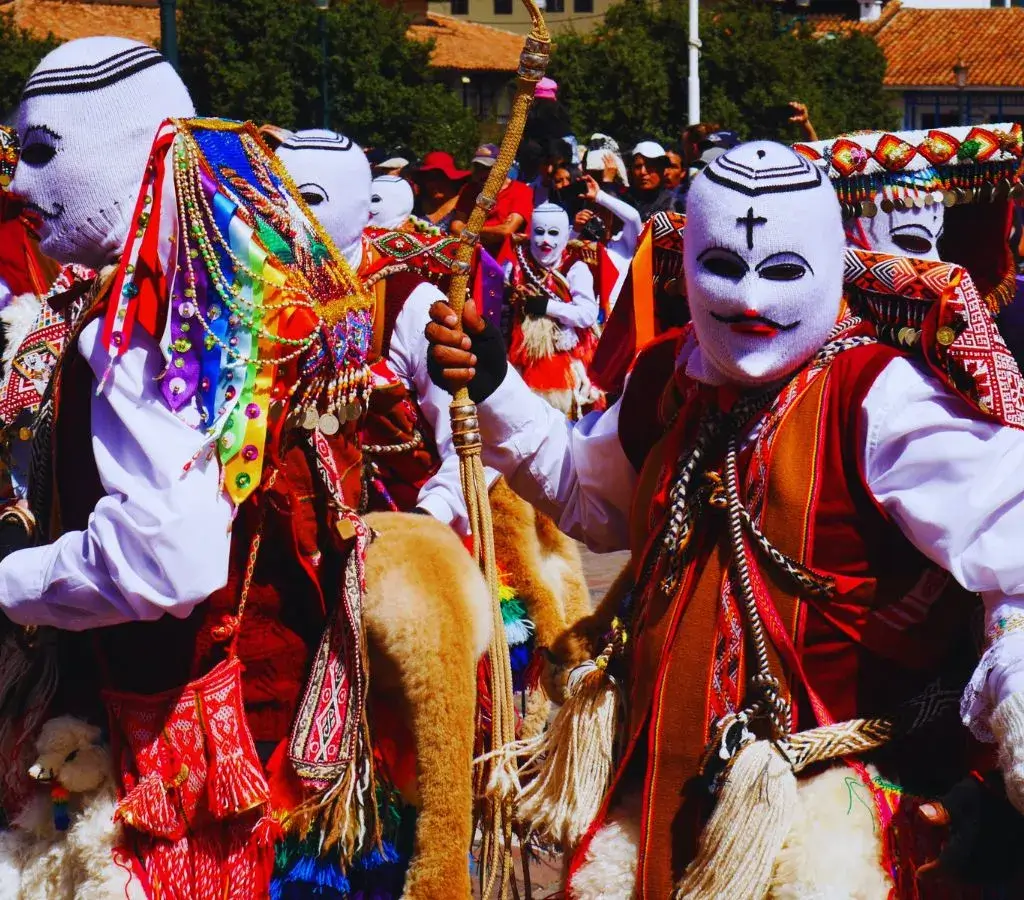
Without a doubt, the beating heart of the festival is its colorful and energetic traditional dances. More than a dozen dance troupes fill the streets of Paucartambo, presenting a breathtaking spectacle of finely embroidered costumes, handcrafted plaster masks, and intricate choreographies. Every movement and every step carries meaning, portraying historical, religious, and social figures from Peru's colonial and republican periods through a unique blend of satire, respect, and theatrical expression.
Among the many remarkable performances, these are some of the festival's most iconic dances:
Each dance troupe preserves profound cultural symbolism and a sacred legacy that has been proudly passed down from generation to generation.
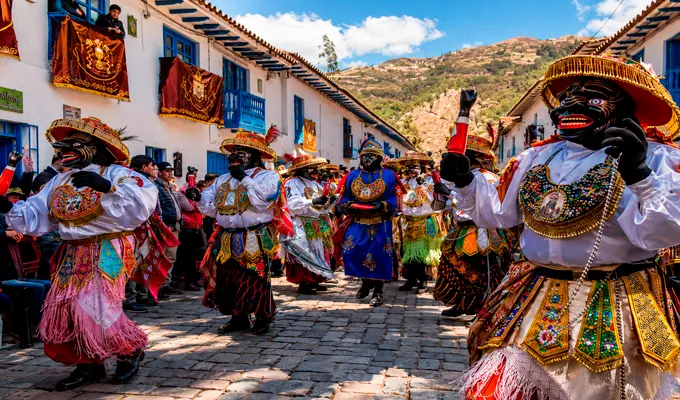
The Our Lady of Mount Carmel Festival goes far beyond being a religious celebration; it is one of the most vibrant, authentic, and impressive expressions of Cusco's cultural heritage. Visiting Paucartambo during these magical days is much more than watching processions and dances it is an invitation to immerse yourself in the town's identity through every sense.
Visitors are rewarded with unforgettable experiences, from tasting authentic local cuisine to discovering centuries-old traditions preserved by local families, all while embracing the festive spirit that fills every corner of the town.
Thanks to its extraordinary cultural richness and the dedication of thousands of dancers and musicians, this festival has earned a place of honor among Peru's most important celebrations. Today, it is proudly recognized as one of the country's most iconic, fascinating, and authentic cultural events a must-see experience for anyone wishing to discover the true spirit of the Andes.
If your goal is to experience the pure essence of Andean culture, the Our Lady of Mount Carmel Festival of Paucartambo is undoubtedly an event you should experience at least once in your lifetime.
This is far more than a festival to watch it is a sensory and spiritual journey where time seems to stand still. Its remarkable blend of living history, centuries-old traditions, inspiring music, symbolic dances, and profound devotion makes it one of Peru's most moving and authentic cultural celebrations. A visit to Paucartambo is not just another tourist destination; it is an unforgettable journey into the heart of Cusco's living traditions and Andean heritage.
The Inti Raymi, or Festival of the Sun, is an ancestral Inca celebration held on June 24th in Cusco, Peru. This event honors the god Inti and strengthens the spiritual and cultural connection of the Andean peoples. It is one of the most important celebrations in the region.
Inti Raymi is one of the most important celebrations of the Inca era, which is still alive today. It takes place on June 24th in Sacsayhuamán, with rituals, dances, and ceremonies in honor of the sun god. This festival combines religious and cultural elements of the Inca civilization, reflecting the spiritual and cultural wealth of the Andean people.
Inti Raymi originates in the Inca Empire, where worship was dedicated to the sun god, Inti. Despite the Spanish prohibition, it emerged as a symbol of the Andean cultural renaissance, showing the resistance of indigenous traditions in Peru.
Inti Raymi has its roots in Inca culture, reflecting the beliefs and traditions of this Andean civilization. It is celebrated during the winter solstice, with rituals of gratitude to the sun and prayers for protection in agricultural cycles. The Inca, his court, and priests participated in ceremonies that included offerings, dances, and music.
One of the most significant moments was the worship of the sun, the source of life and energy. This festival was an event that strengthened the power of the Inca, although it was banned by the Spanish, Inti Raymi remains a symbol of Andean identity and culture.
With the arrival of the Spanish and the imposition of Christianity, this celebration was banned due to its pagan nature. Despite the repression, the traditions of the festival remained alive in the collective memory of the Andean people, transmitted in secret.
In the 20th century, during the resurgence of indigenous cultural identity, the tradition was revived in the 1940s when intellectuals and indigenous leaders worked to recover this festival, leading to its reinstatement and spread in Cusco.
The sun, represented by the deity Inti, was fundamental to the Incas, being considered the source of life and sustenance for all forms of existence. In Inti Raymi, the sun symbolizes fertility, abundance, and the cycles of nature. This festival is an act of veneration towards Inti and a spiritual renewal with the earth and the cosmos.
Inti Raymi is a key festival in the Andean worldview, which sees nature, humans, and gods as interconnected. This celebration represents a moment of harmony and reciprocity between humanity and the universe. It is an opportunity to renew respect and gratitude towards nature and divine forces.
Dedicated to the sun god, although it was suppressed during Spanish colonization, it has resurged with strength and is now celebrated in Cusco (Peru), particularly at the Archaeological Center of Sacsayhuamán, the cradle of civilization.
It is one of the most important festivals in Peru, attracting thousands of visitors each year. This year, 2025, promises to be unique, with ancestral ceremonies, theatrical representations, folk dances, and traditional cuisine. Organizers have prepared a special program for the occasion.
The festival is held every June 24th, during the winter solstice in the Southern Hemisphere, and lasts several days, from June 21st to June 24th. During this time, various activities take place in Cusco and its surroundings, allowing visitors to experience Andean culture and enjoy the celebration.
The staging of Inti Raymi takes place in 3 venues in the city of Cusco.
Qorikancha, or Temple of the Sun, is a key location for Inti Raymi in Cusco. This archaeological site, dedicated to solar worship in the Inca Empire, still bears traces of its splendor. During Inti Raymi, ceremonies are held in honor of the sun, beginning at Qorikancha on June 24th in the early hours of the day.
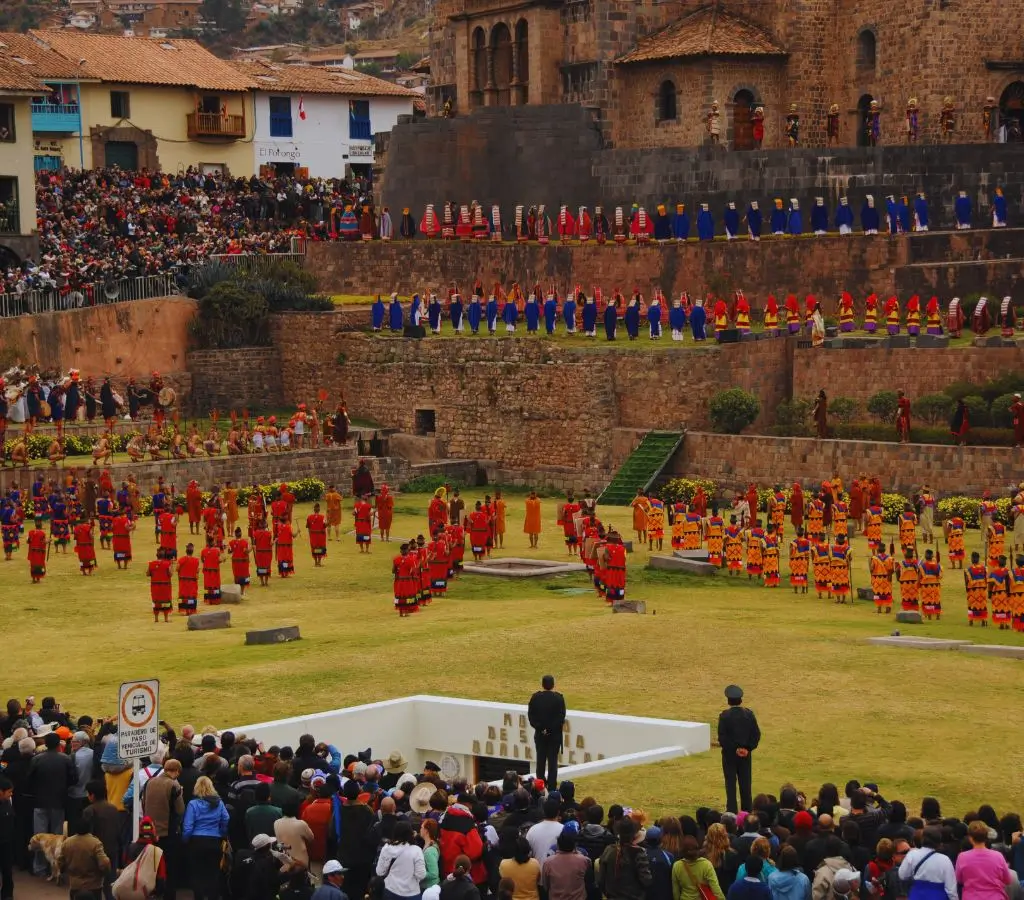
The Plaza de Armas of Cusco is another key location for this tradition, where the mayor participates in the celebration. During the festival, there are parades, theatrical representations, and folk dances, showcasing the spirit of Inti Raymi. This square attracts both tourists and locals, making it a prominent gathering spot.

The Sacsayhuamán Fortress, on the outskirts of Cusco, is the main venue for Inti Raymi. With its massive stone walls, it serves as the backdrop for ceremonies and rituals. After the performances at Qorikancha and Plaza de Armas, visitors can witness the recreation of ancient Inca rituals, such as the offering to the sun and the worship ceremony.
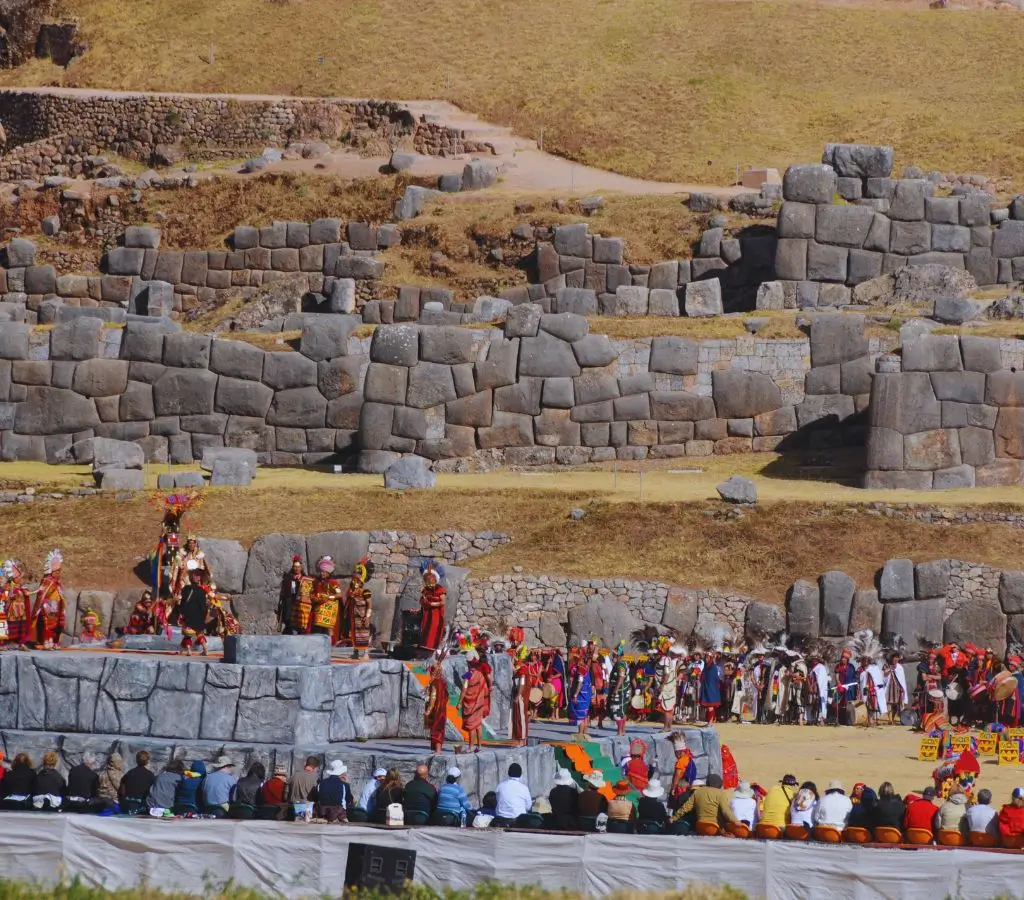
The Inti Raymi program offers various cultural activities to celebrate Andean heritage, including theatrical performances at Qorikancha, folk parades at the Plaza de Armas, and the main ceremony at Sacsayhuamán, with the participation of the mayor of Cusco. There are also art exhibitions, craft fairs, and traditional food tastings for visitors.
Let’s detail some of the key characters that participate during Inti Raymi:
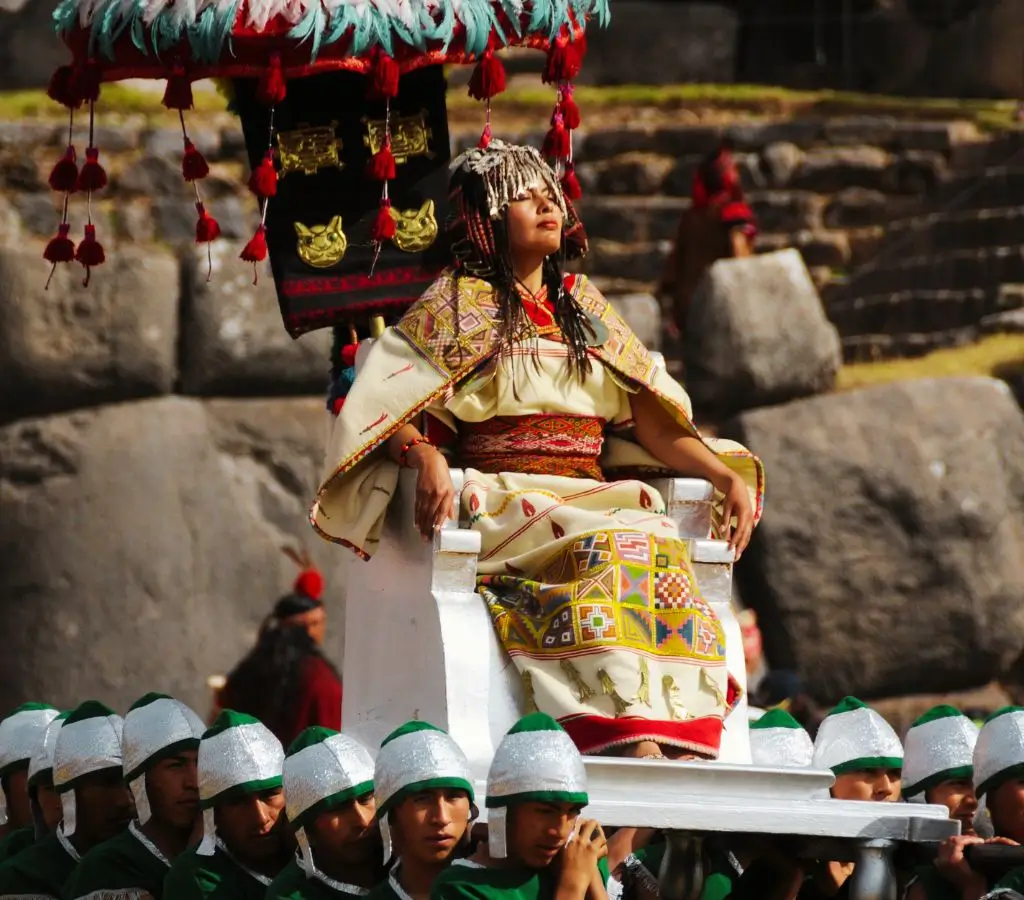
During the celebration of Inti Raymi, the Inca and the Coya play prominent roles as representatives of the Inca royalty.
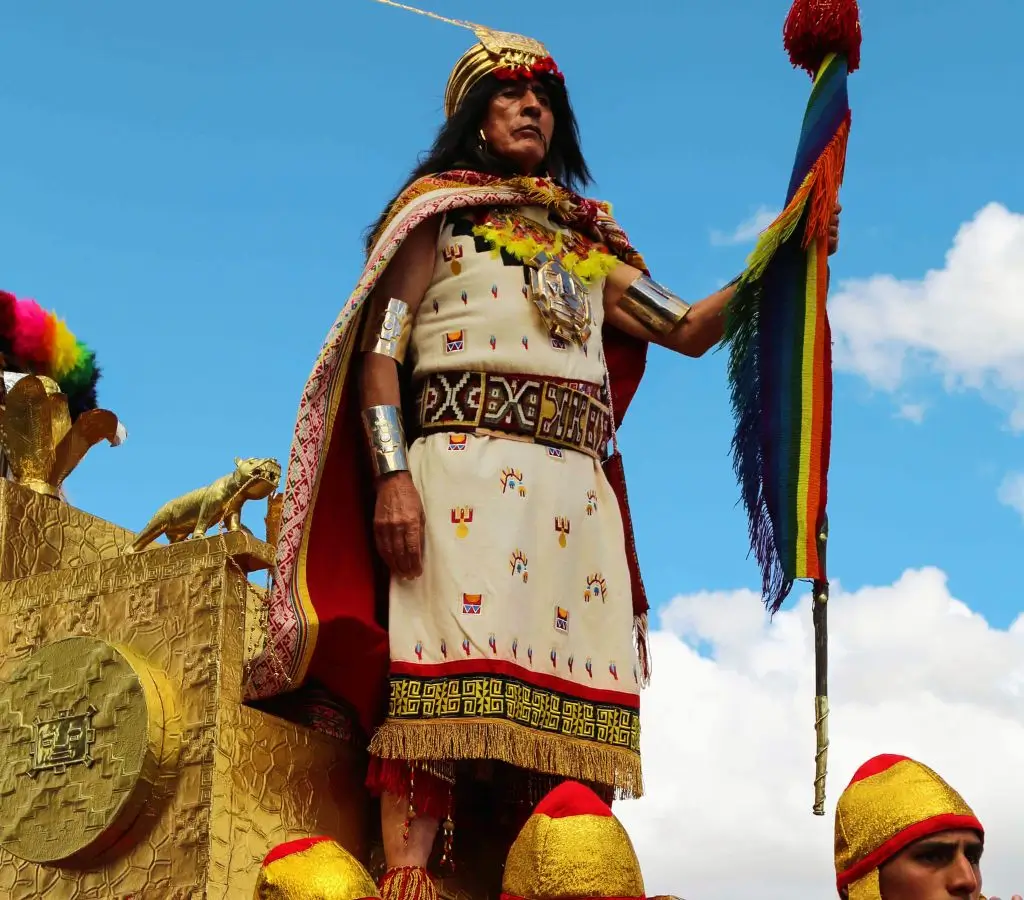
The Inca, as the leader, leads the ceremonies in honor of the sun, accompanied by the Coya (his wife). Together, they symbolize the union between the people and their rulers, reflecting the sacred relationship between humanity and the cosmos.
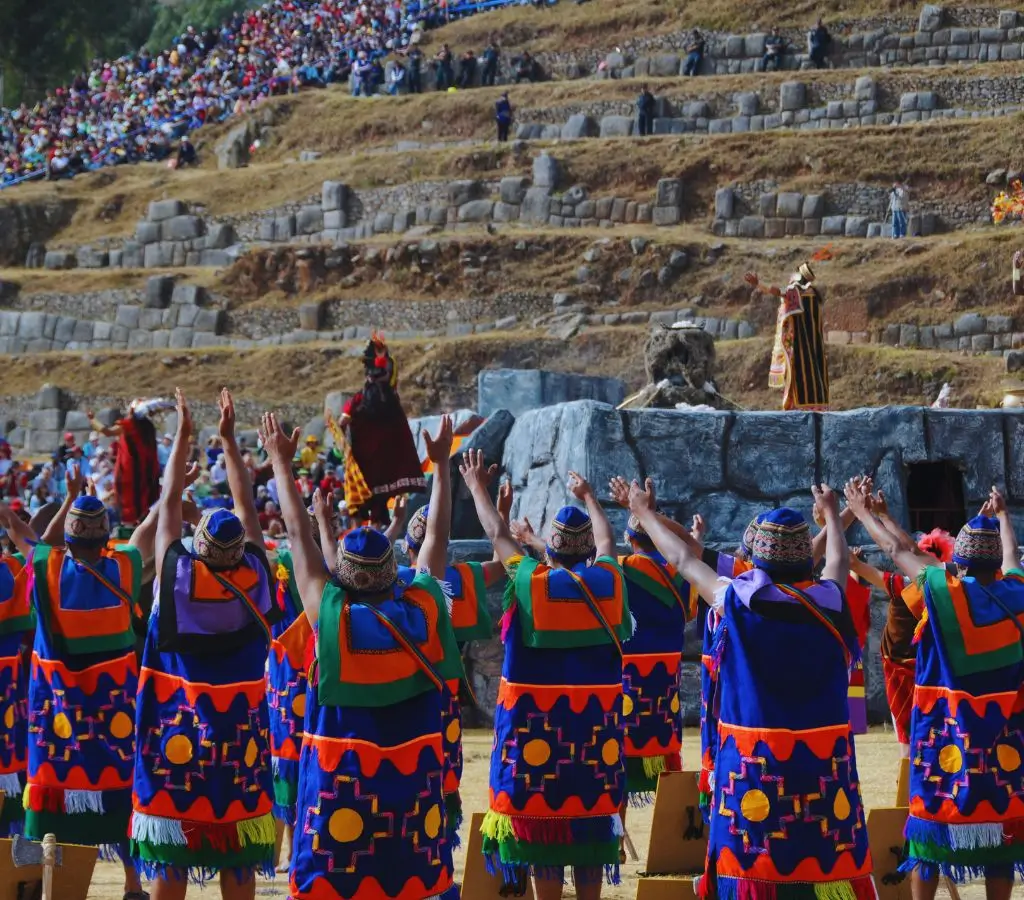
The ancient dances and rituals are fundamental to Inti Raymi, as they reflect the arts and spirituality of the Andean people. Each dance has a deep symbolic meaning, based on millenary traditions. With their movements, the dancers pay tribute to the gods, celebrate nature, and showcase the cultural identity of their communities.
Women play a key role in Inti Raymi, actively participating in the ceremonies and dances while preserving cultural traditions. During the festival, they wear colorful outfits representing the diversity of the Andean region; many women also take on important roles as priestesses, shamans, and community leaders, strengthening and transmitting Andean culture.
This celebration dedicated to the sun, a deity in the Inca worldview, is held on June 24 in Sacsayhuamán, with rituals of thanksgiving for the harvest and the arrival of the new solar cycle. It is a renewed manifestation of the rich cultural and spiritual heritage of the Peruvian people.
Inti Raymi is primarily celebrated in the city of Cusco, specifically in Sacsayhuamán, an important cultural center today.
Inti Raymi is celebrated every year on June 24, coinciding with the winter solstice in the Southern Hemisphere. The festivities begin days before, with a series of pre-events leading up to the main ceremony on the designated day.
The schedule varies each year, but generally includes religious ceremonies, theatrical performances, parades, gastronomy, and cultural events in Cusco. The details of the program are announced in advance by the authorities.
Tickets for this event can be purchased online or at authorized sales points in Cusco and nearby areas. Due to high demand, it is recommended to buy them in advance to secure access to the festival. Inti Raymi Tickets
Many visitors prefer to attend Inti Raymi with travel agencies that offer packages including transportation, accommodation, guides, and tickets. These agencies simplify travel planning and ensure a smooth experience.
If you have any questions, you can find the answers here:
Inti Raymi lasts approximately one and a half to two hours.
Inti Raymi is a crucial festival for rural communities, showcasing their connection to ancient traditions and celebrating nature and the cosmos.
Inti Raymi is celebrated every year on June 24 in the city of Cusco, with the main event held at the archaeological site of Sacsayhuamán.
Yes, taking photos and videos is generally allowed during Inti Raymi, as visitors enjoy the opportunity to capture special moments of the festival. However, it is important to follow the restrictions and rules set by the local authorities, as these are in place to ensure respect for traditions and the proper development of the activities.
We currently offer special packages designed specifically for experiencing this unique event. These packages include everything necessary to fully enjoy the celebration, such as comfortable accommodations, safe transportation, expert tour guides, and tickets to the main archaeological sites of Cusco.
Come to Cusco and don't miss the chance to learn more about this festival. Contact us at +51 944 714 563 or by email at info@illapa.com, and let us take you on this vibrant adventure.