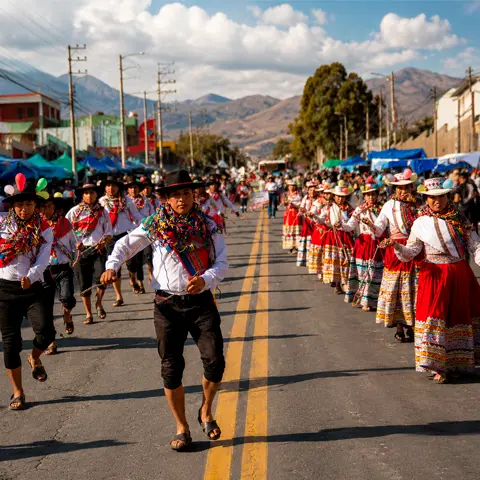
Every August 15, the beautiful White City celebrates the anniversary of its Spanish foundation. During these festivities, Arequipa comes alive as thousands of locals and visitors gather to enjoy parades, concerts, flavorful food festivals, cultural events, and, of course, the colorful and traditional Friendship Parade (Corso de la Amistad).
More than just another date on the calendar, Arequipa’s anniversary is the perfect occasion to celebrate everything that makes this city unique: its rich history, impressive white volcanic stone architecture, world-famous cuisine, and the proud, resilient spirit that has made it one of Peru’s most beloved and important cities.
The main celebration takes place every August 15, commemorating the city's Spanish foundation in 1540. On that day, Captain Garcí Manuel de Carbajal, acting on behalf of Francisco Pizarro, founded the settlement, originally naming it "Villa Hermosa de Nuestra Señora de la Asunta" (Beautiful Town of Our Lady of the Assumption). One year later, King Charles V officially granted it the title of city.
Today, the entire month of August is considered Arequipa's Jubilee Month. The celebrations extend far beyond a single day, with weeks of cultural, artistic, and civic events honoring the city's history, traditions, and strong regional identity.
Long before the arrival of the Spanish, the fertile Chili River Valley was home to several pre-Hispanic cultures that took advantage of its rich soils to develop prosperous agricultural communities.
On August 15, 1540, the Spanish officially founded the city in a strategic location surrounded by the majestic Misti, Chachani, and Pichu Pichu volcanoes. Its fertile lands and privileged position made it an important connection point for trade routes across southern South America.
Thanks to this strategic location, Arequipa quickly became one of the most influential commercial, cultural, and religious centers of the Viceroyalty of Peru.
| Fact | Information |
| Date | August 15 |
| Founded | 1540 |
| Founder | Garcí Manuel de Carbajal |
| Nickname | The White City |
| Main Event | Friendship Parade (Corso de la Amistad) |
| Celebration Month | August |
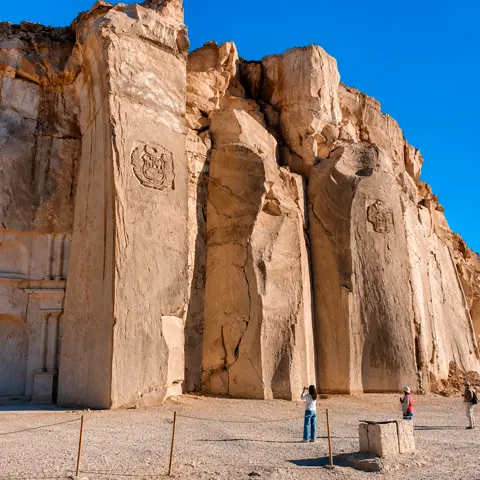
One of Arequipa’s most distinctive and admired features is undoubtedly its architecture built from sillar, a brilliant white volcanic stone extracted from the quarries surrounding the city.
This remarkable material was used to construct the city's churches, convents, colonial mansions, and monuments that define its beautiful Historic Center, which was proudly declared a UNESCO World Heritage Site in 2000.
It is this unique and breathtaking architecture that earned Arequipa its famous nickname around the world: the beautiful "White City."
The celebrations begin during the very first days of August, filling the streets with joy and bringing together thousands of locals and visitors to enjoy a wide variety of cultural and recreational events.
Among the most important highlights of the festivities are:
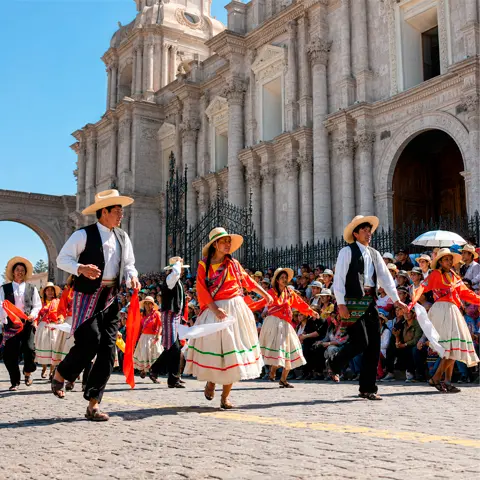
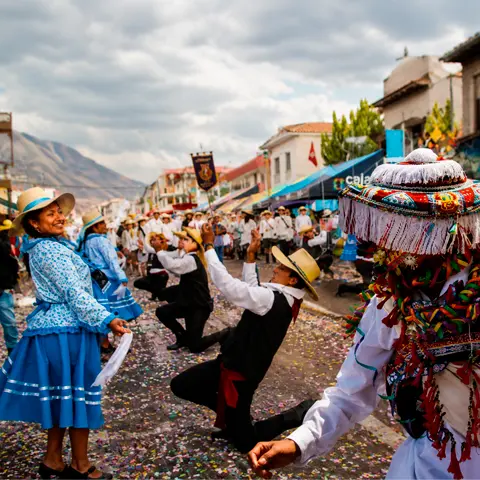
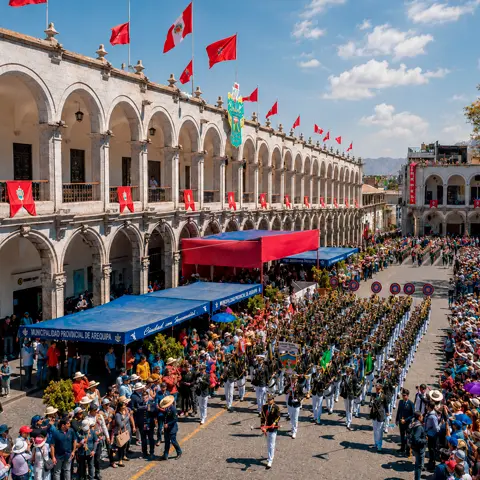
The legendary Friendship Parade (Corso de la Amistad) is undoubtedly the most iconic, vibrant, and colorful event of Arequipa's anniversary celebrations.
For several hours, an impressive procession of dance troupes, folkloric groups, marching bands, and beautifully decorated floats travels along the city's main avenues. It is a spectacular showcase of the cultural richness of Arequipa and other regions of Peru that join in the festivities.
Every year, thousands of spectators gather along the parade route to experience this unforgettable celebration filled with music, tradition, and color, making it one of the country's most important and popular tourist events.
Celebrating Arequipa's anniversary also means enjoying one of the finest and most prestigious culinary traditions in Peru.
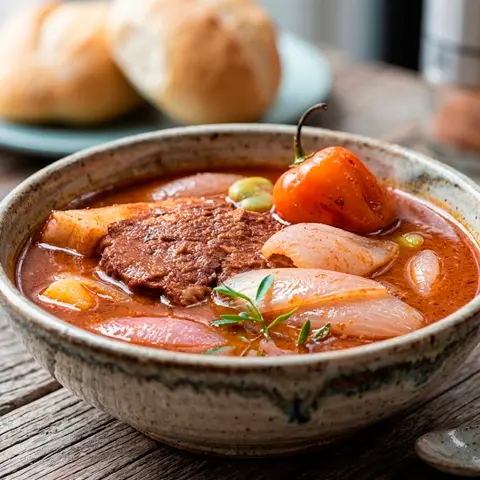
Throughout the month of August, Arequipa’s traditional and historic picanterías (local restaurants) open their doors to thousands of visitors eager to experience the authentic flavors of the region. Among the culinary specialties you simply cannot miss are:
These centuries-old recipes are an essential part of Arequipa's culinary heritage and provide one of the best reasons to visit the city during its anniversary celebrations.
If you're planning to visit during Arequipa's anniversary month, make the most of your stay by exploring the region's most iconic attractions.
These are the must-see destinations:
Each of these destinations offers visitors the opportunity to immerse themselves in the fascinating history, remarkable architecture, and spectacular landscapes that have made Arequipa one of Peru's most beloved travel destinations.
August 15 commemorates the Spanish founding of Arequipa, a historic event that took place in 1540 under the leadership of Captain Garcí Manuel de Carbajal.
The nickname comes from the city's stunning architecture. Many of its churches, mansions, and historic monuments were built using sillar, a beautiful white volcanic stone quarried near the city.
Without question, it is the Friendship Parade (Corso de la Amistad), a spectacular procession featuring traditional dances, marching bands, colorful floats, and thousands of performers that fills the city's streets with celebration every year.
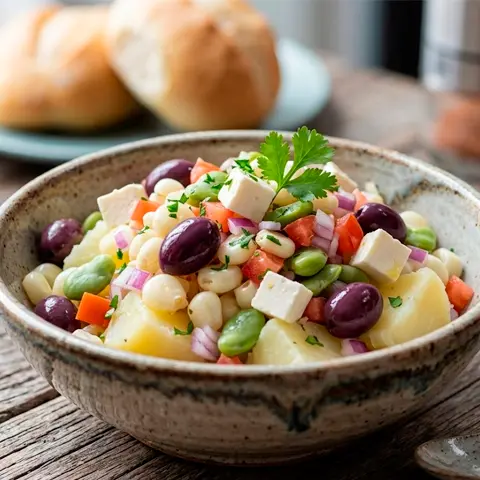
Arequipa's cuisine is considered one of the finest in Peru. During your visit, don't miss specialties such as rocoto relleno, chupe de camarones, adobo arequipeño, ocopa arequipeña, and soltero de queso.
August is Arequipa's Anniversary Month, when the city comes alive with cultural events, parades, concerts, and culinary festivals. It is the perfect opportunity to experience its rich history, remarkable heritage, outstanding cuisine, and the warmth and hospitality of its people in an unforgettable celebration.
The famous Puye Hot Springs are one of Yanque’s best-kept secrets, offering a different experience surrounded by Andean landscapes, natural pools, and a much quieter atmosphere than other thermal complexes in Arequipa. Located in Caylloma Province, these hot springs have become an excellent alternative for travelers seeking relaxation, nature, and authentic experiences away from mass tourism.
Located in the district of Yanque, just 9 kilometers from Chivay, the Puye Hot Springs are situated in one of the most impressive high-Andean areas of the Colca Valley, at approximately 4,320 meters above sea level. Their natural surroundings, surrounded by mountains, Andean landscapes, and fresh air, make this place an ideal alternative for travelers looking to combine relaxation, nature, and thermal tourism during their visit to Arequipa.
Thanks to their proximity to the main attractions of the Colca Valley, this destination has become an excellent option for travelers who want to enjoy less crowded hot springs while exploring one of the most visited regions in southern Peru.
| Information | Details |
| Location | District of Yanque, Caylloma Province, Arequipa |
| Distance from Chivay | Approximately 9 km |
| Altitude | Approximately 4,320 meters above sea level |
| Type of attraction | Natural thermal pools |
| Average temperature | Between 30°C and 40°C depending on the pool |
| Ideal for | Relaxation, thermal tourism, and rest |
| Crowd level | Lower than other thermal complexes in the Colca Valley |
| Recommended visit duration | Between 1 and 2 hours |
| Best time to visit | Mornings or afternoons with fewer visitors |
| Is it worth visiting? | Yes, especially if you are looking for a quieter thermal experience |
Discover this thermal attraction as part of a complete Colca Valley experience. Our tours allow you to explore Andean landscapes, traditional villages, and enjoy enough time to relax at the Puye Hot Springs.
👉 Explore our Colca Valley tours
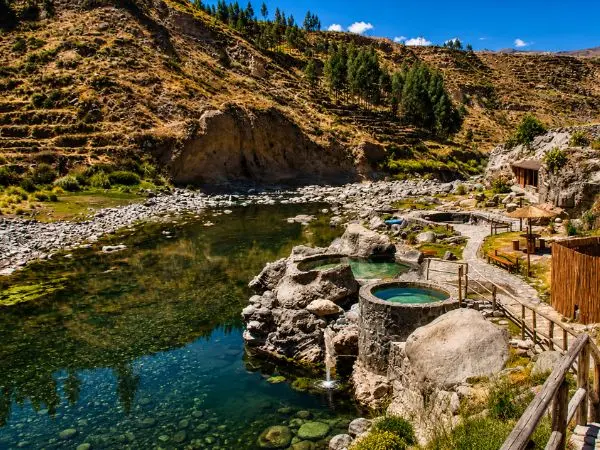
The thermal pools of Puye maintain a rustic and traditional style that differentiates them from other thermal complexes in the Colca Valley, offering a much more natural experience connected to the Andean surroundings. These waters originate from natural underground springs and are channeled into pools built with traditional materials such as stone, mud, and straw, blending visually with the high-Andean landscape surrounding the area.
Currently, the complex has four thermal pools fed by mineral waters containing naturally occurring elements such as potassium, iron, lithium, and sodium. Thanks to their natural characteristics and the peaceful environment where they are located, these hot springs are considered an excellent alternative for travelers seeking relaxation away from more crowded places. Due to the depth of some pools, constant supervision of children and caution during the visit are recommended.
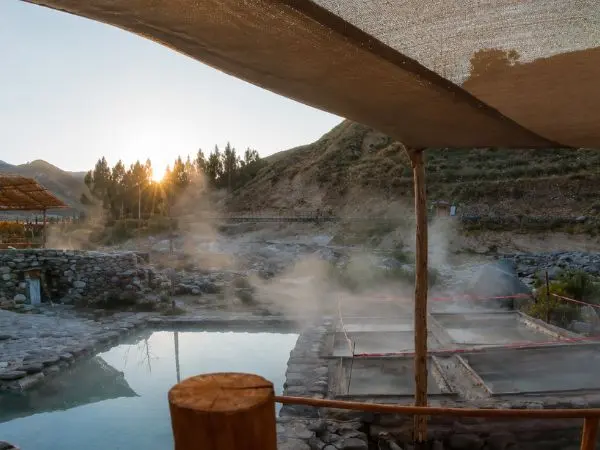
One of the most interesting aspects of the Puye Hot Springs is that each pool has different temperature levels, allowing visitors to choose a more relaxing or slightly more intense thermal experience according to their preferences. Thanks to this natural variation, visitors can enjoy everything from warm waters to hotter pools within the same thermal complex.
Approximate spring temperature: 80°C
Average pool temperature: 30°C – 35°C
Ideal for travelers who prefer moderate temperatures and longer relaxation sessions.
Approximate spring temperature: 67°C
Average pool temperature: 35°C – 40°C
Considered one of the warmest options in the complex, recommended for travelers seeking a more intense thermal experience.
Approximate spring temperature: 82°C
Average pool temperature: 30°C – 40°C
Features thermal variations that allow visitors to experience different temperature levels depending on the area of the pool.
The thermal diversity makes Puye an attractive alternative within the Colca Valley, allowing visitors to adapt the thermal experience according to their preferences and comfort level.
Planning to visit the Colca Valley? Then Chivay will probably be one of the first stops on your journey. Considered the main gateway to Colca Canyon, this Andean town combines mountain landscapes, ancestral traditions, local gastronomy, and some of the most important tourist attractions in the Arequipa region.
Located at more than 3,600 meters above sea level, Chivay has become the most important tourist center in Caylloma thanks to its strategic location, tourism infrastructure, and proximity to destinations such as Cruz del Cóndor, La Calera hot springs, and several traditional villages of Colca. Whether as a starting point or a place to spend the night, this destination offers much more than simply being a stop along the way.
If you are organizing your trip, here you will find information about:
Yes. Chivay not only serves as the gateway to the Colca Valley, but it is also one of the best places to experience Caylloma’s traditional culture, enjoy hot springs, try local cuisine, and rest before continuing toward the canyon. Many travelers use this town as a base for exploring Colca because of its tourism infrastructure, strategic location, and variety of experiences available.
Chivay is located in Caylloma Province, Arequipa region, and is considered the main gateway to the Colca Valley, one of Peru’s most visited tourist destinations. This Andean town is located approximately 163 kilometers from the city of Arequipa, on the western slopes of the Andes Mountains.
Situated at 3,635 meters above sea level, Chivay stands out for being surrounded by mountains, volcanoes, and high-Andean landscapes that form part of the Colca ecosystem. Thanks to its strategic location, it has become the main connection point for travelers wishing to visit attractions such as Cruz del Cóndor, La Calera, Yanque, and several traditional villages of Caylloma.
| Information | Details |
| Location | Caylloma Province, Arequipa |
| Distance from Arequipa | Approximately 163 km |
| Altitude | 3,635 meters above sea level |
| Travel time from Arequipa | Approximately 3.5 to 4 hours |
| Known for | Being the gateway to the Colca Valley |
| Climate | Cool mountain climate |
| Average daytime temperature | 15°C – 19°C |
| Average nighttime temperature | 0°C – 5°C |
| Dry season | April – November |
| Rainy season | December – March |
| Is it cold? | Yes, especially during the nights |
| Best time to visit | April to November |
| Ideal for | Cultural tourism, adventure, and nature |
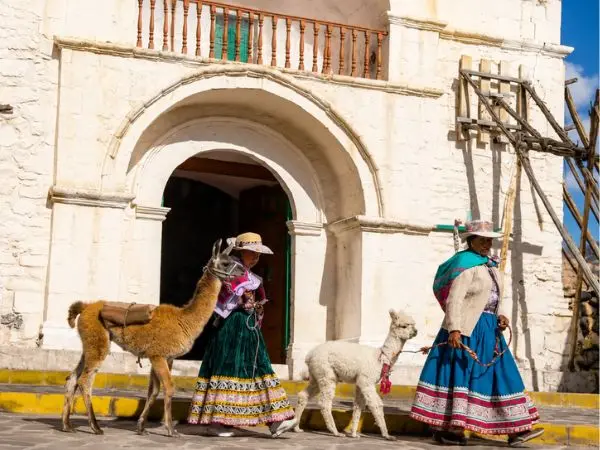
Explore Chivay, its Andean landscapes, traditional villages, and the main attractions of the Colca Valley accompanied by local guides and tourist transportation. Many travelers prefer organized experiences to maximize their time, visit more places, and enjoy greater comfort during the journey.
👉 Discover our Colca Valley tours that include visits to Chivay
Getting to Chivay from Arequipa is relatively easy, and there are several options depending on your budget, available time, and travel style. Since this town serves as the main tourist access point to the Colca Valley, it has frequent connections from Arequipa for both independent travelers and those preferring organized excursions.
The most comfortable way to visit Chivay is through an organized Colca Valley tour. These experiences usually include tourist transportation, stops at Andean viewpoints, guides, and visits to the region’s main attractions.
It is also possible to travel independently from Arequipa’s bus terminal. Buses to Chivay typically complete the route in approximately 3.5 to 4 hours, depending on weather conditions and traffic.
For travelers seeking greater flexibility, private transportation allows additional stops in places such as Pampa Cañahuas, Patapampa, or Colca viewpoints, making the journey more enjoyable.
The route to Chivay crosses high-Andean landscapes, natural reserves, and some of the highest points in southern Peru, making the journey itself an important part of the experience.
The history of Chivay is closely connected to the ancient cultures that inhabited the Colca Valley long before the expansion of the Inca Empire. This territory was originally occupied by groups such as the Collaguas, Cabanas, and Tapay communities, who developed complex agricultural systems, Andean terraces, and organizational structures that still influence local traditions today.
During the Inca expansion, the region became part of the Tahuantinsuyo, strengthening cultural and commercial connections throughout the southern Andes. Later, during the Spanish colonial period, Chivay gained importance through mining and territorial reorganization promoted by Viceroy Francisco de Toledo, who established the well-known indigenous reductions throughout the region.
Despite the passage of time, Chivay continues preserving many cultural expressions inherited from these civilizations, visible today through festivals, traditional clothing, religious architecture, and iconic dances such as the famous Wititis, internationally recognized as part of Peru’s cultural heritage.
Today, the town combines tradition, tourism, and living culture, becoming one of the most important destinations in the Colca Valley.
Can you imagine standing at nearly 5,000 meters above sea level surrounded by some of the most impressive volcanoes in southern Peru? The Volcano Viewpoint, also known as Abra Patapampa, is one of the most spectacular stops on the route to the Colca Valley, offering unique panoramas, high-Andean landscapes, and an experience that combines nature, extreme altitude, and Andean tradition.
Located at 4,910 meters above sea level, this viewpoint has become a must-stop destination for travelers following the route between Arequipa and Chivay. From here, visitors can observe numerous snow-capped peaks and volcanoes, discover traditional Andean apachetas, and experience one of the highest accessible road points during a tourist excursion in Arequipa.
In this guide, you will discover which volcanoes you can see, how to get there, how to prepare for the altitude, what clothing to bring, and why Patapampa has become one of the most famous viewpoints in the Colca Valley.
| Information | Details |
| Location | Abra Patapampa, Arequipa – Chivay route |
| Altitude | 4,910 meters above sea level |
| Type of attraction | High-mountain natural viewpoint |
| Entrance fee | Free access |
| Recommended time | 15–20 minutes |
| Best time to visit | Clear mornings |
| Tourist route | Road to the Colca Valley |
| Ideal for | Photography, landscapes, and volcano observation |
| Difficulty level | Low (but requires altitude adaptation) |
| Average temperature | Cold during most of the year |

Experience reaching one of the highest points on the route to Colca while exploring high-Andean landscapes, observing volcanoes, and discovering some of Arequipa’s most impressive natural scenery. The Volcano Viewpoint is one of the most iconic stops on the road toward Chivay and the Colca Valley.
👉 Explore our Colca Valley tours that include this experience
One of Patapampa’s greatest attractions is its impressive panoramic view that allows visitors to observe some of the most representative volcanoes of Arequipa and southern Peru. On clear days, the horizon becomes dominated by enormous volcanic formations, snow-capped mountains, and mountain ranges that make this stop one of the best panoramic points along the route to the Colca Valley.
Known for its constant volcanic activity, Sabancaya often displays columns of steam or fumaroles visible from different points of the viewpoint.
Famous for being the location where the well-known Juanita Mummy was discovered, this snow-capped volcano stands out for its historical and archaeological importance.
These mountains are part of Colca’s dominant landscape and are associated with headwaters connected to the hydrographic system that feeds the Amazon River.
Depending on weather conditions, it is also possible to appreciate some of Arequipa’s most iconic volcanoes from a distance.
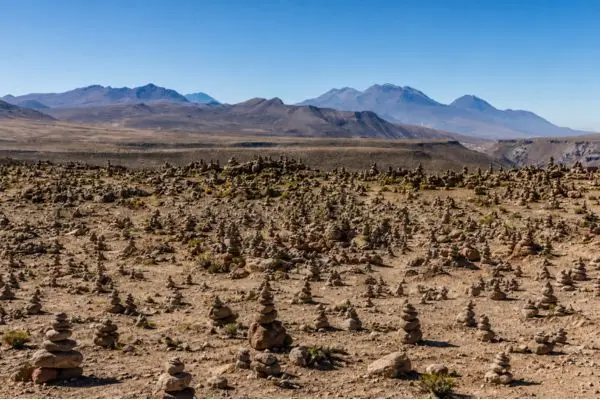
Upon arriving at the Volcano Viewpoint, it is impossible not to notice dozens of small stone towers scattered throughout the landscape. These structures, known as apachetas, are part of an ancestral Andean tradition connected to respect for mountains, travel, and spiritual connection with nature.
Since pre-Hispanic times, travelers crossing high-altitude routes built apachetas by stacking stones as symbolic offerings to the Apus, considered protective mountain spirits within the Andean worldview. These offerings represented gratitude, protection during travel, or wishes for a safe journey.
Today, thousands of visitors continue this tradition by leaving small stones while observing the volcanoes and snow-capped peaks surrounding Patapampa. Beyond their photographic value, apachetas represent one of the most important cultural elements connecting the Colca landscape with ancient Andean traditions.
For many travelers, building a small apacheta in Patapampa has become an essential part of visiting one of the highest points on the route toward the Colca Valley.
The Volcano Viewpoint is located at Abra Patapampa, along the highway connecting Arequipa and Chivay, making it one of the best-known stops during the journey toward the Colca Valley. Due to its strategic location, there are different ways to get there depending on the type of experience you are looking for.
The most common way to visit the viewpoint is through Colca Valley excursions. Most tours stop here to allow time for photography, landscape observation, and brief acclimatization before continuing toward Chivay.
It is also possible to visit independently by following the Arequipa – Chivay highway. The journey usually takes between 3 and 4 hours depending on stops and weather conditions.
Buses connecting Arequipa and Chivay travel along this route, although they normally do not make extended stops at the viewpoint, making this option less flexible.
Due to the high altitude, it is recommended to avoid intense physical effort immediately after arriving at the viewpoint.
At 4,910 meters above sea level, the Volcano Viewpoint is not only one of the highest points along the Colca route but also one of the places where altitude may feel most intense for many travelers. Due to extreme mountain conditions, low temperatures, strong winds, and reduced oxygen levels are a normal part of the experience.
Mornings usually provide clear skies and better conditions for volcano observation, while afternoons may bring stronger winds and clouds that reduce visibility. Because of this, most excursions visit during early hours.
Patahuasi is one of the most extreme and surprising areas of Arequipa, known for its low temperatures, high-altitude landscapes, and strategic location within the Salinas and Aguada Blanca National Reserve. Although it is a frequent stop for travelers heading toward the Colca Valley, few people truly know the natural and cultural importance of this territory.
Located at nearly 3,900 meters above sea level, Patahuasi stands out for its vast plains, Andean wildlife, wetlands, and extreme weather conditions that make this area one of the coldest environments in southern Peru. In addition to its ecological importance, this place serves as a rest stop for travelers heading to destinations such as Chivay, the Colca Valley, or the Salinas and Aguada Blanca Reserve.
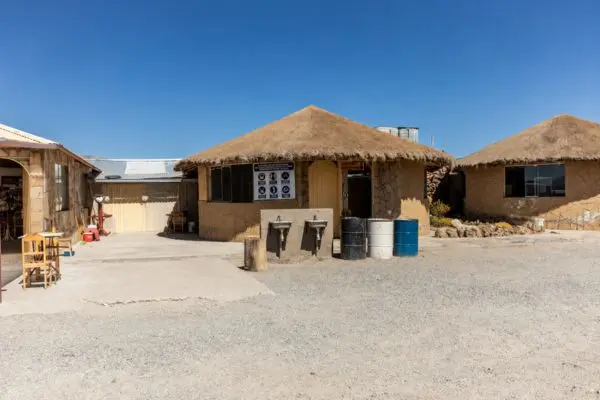
Patahuasi is located within the Salinas and Aguada Blanca National Reserve, in the Arequipa region, forming part of the tourist route that connects the city of Arequipa with the Colca Valley. This high-altitude area administratively belongs to the district of Yanahuara and sits at approximately 3,900 meters above sea level, surrounded by extensive plains, wetlands, and ecosystems characteristic of the southern Peruvian Andes.
Due to its strategic location, Patahuasi serves as a frequent stop for travelers heading toward Chivay, the Colca Valley, or the Salinas Reserve, allowing visitors to rest, observe high-Andean wildlife, and experience some of the most representative landscapes of Arequipa’s puna region.
| Information | Details |
| Location | Salinas and Aguada Blanca Reserve, Arequipa |
| Altitude | Approximately 3,900 meters above sea level |
| Province | Arequipa |
| Type of attraction | High-altitude natural landscape |
| Known for | Being one of the coldest areas in Arequipa |
| Tourist route | Arequipa – Chivay – Colca Valley |
| Minimum temperature | Can drop below 0°C |
| Ideal for | Photography, nature, and wildlife observation |
| Located within | Salinas and Aguada Blanca National Reserve |
Patahuasi is part of one of the most impressive scenic routes in southern Peru, offering views of high-altitude landscapes, wildlife, and unique ecosystems on the way to the Colca Valley. Many travelers take advantage of this stop to experience the Salinas and Aguada Blanca Reserve up close while continuing toward one of Arequipa’s most visited destinations.
👉 Explore our Colca Valley tours that travel along this route
Patahuasi’s climate is characterized by low temperatures, strong winds, and high altitude, features that make this area one of the most extreme environments in Arequipa. During much of the year, especially in the dry season, nighttime temperatures can drop considerably, while mornings are often accompanied by intense cold, clear skies, and strong solar radiation.
Between May and August, the coldest conditions are usually recorded, with frequent frosts occurring in some nearby areas. Despite these extreme conditions, the high-Andean landscape, wetlands, and wildlife make this environment one of the most interesting natural areas in southern Peru.
| Information | Details |
| Altitude | Approximately 3,900 meters above sea level |
| Average daytime temperature | 8°C – 15°C |
| Average nighttime temperature | Can fall below 0°C |
| Coldest months | May – August |
| Rainy season | November – March |
| Climate type | Cold high-Andean climate |
| Is it windy? | Yes, especially during afternoons |
| Recommendation | Bring thermal clothing and sun protection |
Although many travelers know Patahuasi only as a stop on the way to the Colca Valley, this area offers experiences related to nature, photography, wildlife observation, and unique high-Andean landscapes in Arequipa. Thanks to its location within the Salinas and Aguada Blanca National Reserve, this area allows visitors to appreciate ecosystems characteristic of the Andean puna while traveling along some of the most important tourist routes in southern Peru.
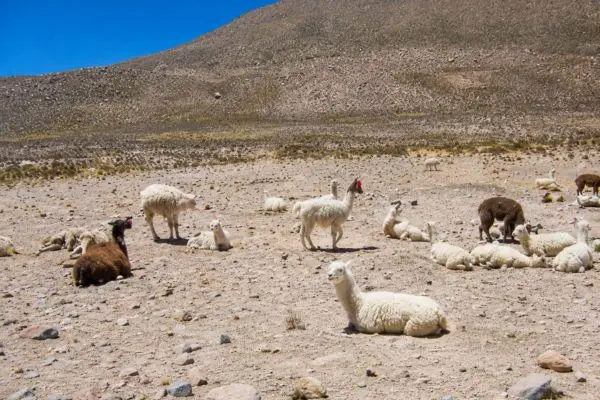
The surroundings of Patahuasi allow visitors to observe species adapted to high altitudes, including vicuñas, llamas, alpacas, Andean birds, and wildlife characteristic of high-altitude wetlands.
The extensive plains, mountains, clear skies, and changing light during sunrise and sunset make Patahuasi an interesting destination for landscape and nature photography.
Many travelers use Patahuasi as a resting point before continuing toward Chivay, the Colca Valley, or the Salinas Reserve, taking advantage of the stop to acclimatize and enjoy the natural surroundings.
Patahuasi’s location provides a better understanding of the biodiversity and landscapes that form part of one of the most important protected areas in southern Peru.
Despite the low temperatures and extreme conditions, Patahuasi is home to a surprising diversity of species adapted to life at high altitudes. Its location within the Salinas and Aguada Blanca National Reserve makes this area one of the most important natural spaces for the conservation of high-Andean ecosystems in Arequipa.
Patahuasi’s landscapes are dominated by extensive plains, wetlands, and vegetation typical of the Andean puna, where cold-resistant species such as ichu grass, tola shrubs, yareta plants, and small high-Andean bushes predominate. These plant formations play a fundamental role in maintaining the ecosystems surrounding the reserve.
High-Andean wildlife is one of the main natural attractions of this region. During your visit, it is common to observe:
✓ Wild vicuñas
✓ Llamas and alpacas raised by local communities
✓ Vizcachas in rocky areas
✓ High-Andean birds adapted to extreme altitudes
✓ Wildlife associated with wetlands and Andean marshes
Thanks to the combination of open landscapes, wildlife, and protected ecosystems, Patahuasi has become one of the best areas for observing high-Andean biodiversity during the route toward the Colca Valley.
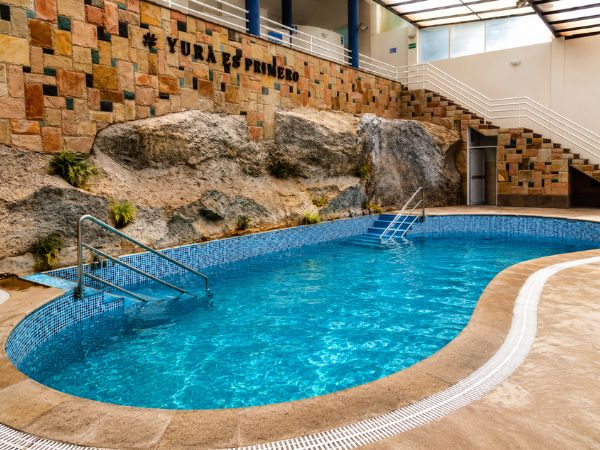
Yura, Arequipa, located near Arequipa, has become one of the most interesting destinations for travelers looking to combine nature, history, Andean landscapes, and wellness experiences all in one place. This district brings together a variety of tourist attractions that allow visitors to discover a different side of the region, from ancient agricultural systems to natural settings ideal for exploration.
Many people visit the Yura Hot Springs for their mineral waters, pleasant temperatures, and easy access from Arequipa.
Among its main attractions are the agricultural terraces of Old Yura, the Corontorio Waterfall, the traditional lime kilns, the Coipata viewpoint, and the well-known hot springs route, considered one of the most sought-after experiences for domestic and international visitors.
The Yura hot springs are especially known for their mineral properties and the relaxing experience they provide. These waters originate from geological activity linked to Chachani Volcano and feature different compositions, temperatures, and characteristics, making each thermal pool a unique experience.
For many travelers, this route represents an ideal opportunity to relax, enjoy the Andean scenery, and experience a different kind of getaway near Arequipa, especially for those seeking to combine tourism, relaxation, and contact with nature.
Located northwest of Arequipa, Yura is one of the most visited districts for travelers seeking to enjoy hot springs, volcanic landscapes, and natural attractions without traveling too far from the city. Thanks to its proximity and easy access, it has become an excellent option for day trips, rural tourism, or nature excursions.
Situated approximately 26 kilometers from the city of Arequipa and at an altitude of around 2,500–2,600 meters above sea level, Yura stands out for its geography surrounded by volcanic formations, natural routes, and thermal spaces linked to the activity of Chachani Volcano.
Its strategic location makes it easy to visit by public transportation, private vehicle, or organized tours, making it one of the most accessible destinations for travelers wanting to discover unique attractions near Arequipa.
| Factor | Information |
| Location | Yura is located northwest of Arequipa, within the province and region of the same name |
| Altitude of Yura | Approximately between 2,500 and 2,600 meters above sea level depending on the area visited |
| Distance from Arequipa | Approximately 26 km from downtown Arequipa |
| Travel time by bus | Approximately 30 to 45 minutes |
| How to get to Yura | Public transportation, local buses, taxi, private transportation, or personal vehicle |
| Main access route | Highway connecting the city of Arequipa with the district of Yura |
| Best time to visit | Between April and October, during the dry season |
| Climate type | Dry, sunny climate for most of the year with colder nights |
| Ideal for | Hot springs, nature, hiking, short getaways, and rural tourism |
| Recommended duration | Half-day excursion or full-day tour |
One of the greatest tourist attractions of Yura, Arequipa, is its renowned hot springs, considered one of the favorite getaways for travelers seeking to combine relaxation, nature, and wellness. This destination is home to several thermal pools, each with unique characteristics, different temperatures, and experiences that attract both local visitors and travelers exploring the surroundings of Arequipa.
The famous Yura Hot Springs are known for their mineral composition and for being spaces traditionally associated with muscle relaxation, physical recovery, and thermal tourism experiences. Surrounded by volcanic landscapes and natural scenery, these pools offer a unique experience for those who want to disconnect from routine and enjoy a different kind of day trip.
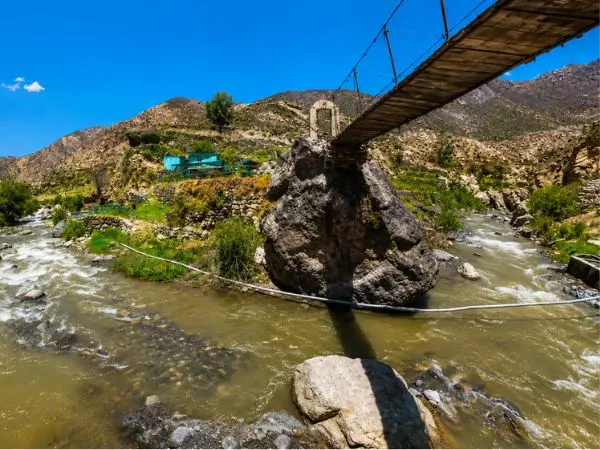
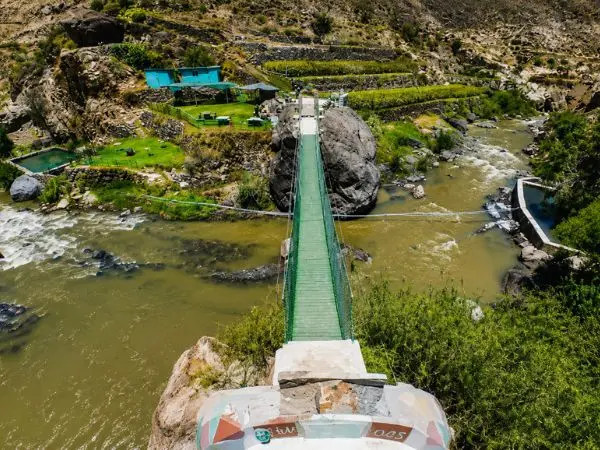
The Puye and Chacapi Hot Springs are among the most visited attractions near Chivay, especially for travelers looking to relax after exploring the Colca Valley.
The entrance fee to most of the thermal pools in Yura is usually around 5 soles, making them an affordable option for travelers, families, and visitors looking for budget-friendly activities near Arequipa.
To reach this destination, you can take buses, local transportation, or private vehicles from Arequipa. Many travelers depart from the Melgar Bus Stop, taking a journey that may take approximately one hour or slightly longer, depending on traffic and the type of transportation used.
Most routes use the Yura Tourist Hotel as their main reference point, considered one of the most commonly used access points to begin the journey toward the different thermal pools.
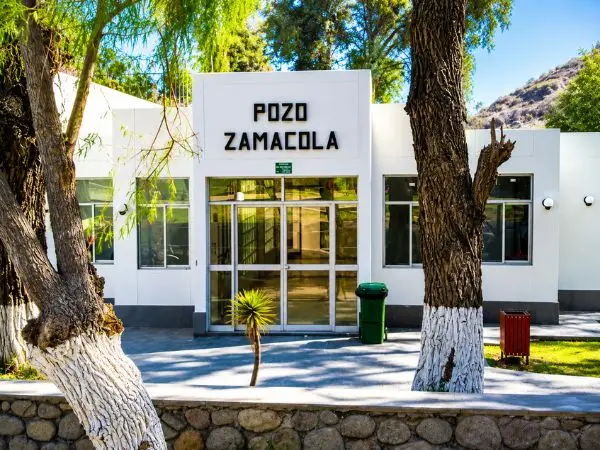
The Zamácola Pool is considered one of the best-known and most visited pools within the Yura Hot Springs. Many visitors prefer it because of its mineral waters, pleasant temperatures, and the relaxing experience it offers.
This pool gained recognition thanks to studies conducted by Edmundo Escomel, a researcher who dedicated part of his work to analyzing the mineral properties found in these greenish waters. Temperatures usually range between approximately 22°C and 28°C, providing comfortable conditions for visitors seeking a more moderate thermal experience.
For many travelers, Zamácola represents one of the best options for beginning to explore the different thermal pools that Yura has to offer.